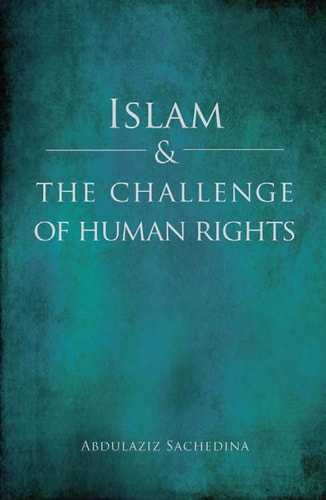
Islam and the Challenge of Human Rights
0
0
As an Amazon Associate and affiliate partner, Menrva Books earns from qualifying purchases. Learn more
Author Description
In 1948, the General Assembly of the United Nations adopted and proclaimed the International Declaration of Human Rights, a document designed to hold both individuals and nations accountable for their treatment of fellow human beings, regardless of religious or cultural affiliations. Since then, the compatibility of Islam and human rights has emerged as a particularly thorny issue of international concern, and has been addressed by Muslim rulers, conservatives, and extremists, as well as Western analysts and policymakers; all have commonly agreed that Islamic theology and human rights cannot coexist.Abdulaziz Sachedina rejects this informal consensus, arguing instead for the essential compatibility of Islam and human rights. He offers a balanced and incisive critique of Western experts who have ignored or underplayed the importance of religion to the development of human rights, contending that any theory of universal rights necessarily emerges out of particular cultural contexts. At the same time, he re-examines the juridical and theological traditions that form the basis of conservative Muslim objections to human rights, arguing that Islam, like any culture, is open to development and change. Finally, and most importantly, Sachedina articulates a fresh position that argues for a correspondence between Islam and secular notions of human rights.
Menrva's Summary
THE THESIS
This book investigates the perceived conflict between Islamic theology and the universal framework of human rights, arguing for their fundamental compatibility. Abdulaziz Abdulhussein Sachedina, a scholar of Islamic studies, challenges the prevailing consensus among both Western policymakers and conservative Muslim leaders that these two systems are mutually exclusive. By examining the historical and juridical foundations of Islamic tradition, he proposes a reinterpretation that allows for the integration of secular human rights concepts within an Islamic context. His analysis emphasizes that universal rights are not culturally neutral but emerge from specific traditions, necessitating a dialogue that respects the religious dimensions of human experience.
THE SCOPE MAP
What You Will Find
- A critical examination of the 1948 International Declaration of Human Rights in relation to Islamic jurisprudence.
- A theological framework for reconciling traditional Islamic law with modern concepts of individual liberty.
- A critique of Western secular approaches that often overlook the role of religion in shaping human rights discourse.
- A comparative analysis of conservative, extremist, and reformist interpretations of Islamic texts regarding human rights.
THE AUTHORITY PERSPECTIVE
Scholars and policy experts recognize this work as a significant contribution to the ongoing dialogue between Islamic theology and international law. Readers frequently note the academic rigor of the text, which provides a nuanced alternative to common binary arguments regarding religion and human rights.
Page Count:
272
Publication Date:
2009-11-05
Publisher:
Oxford University Press
ISBN-10:
0195388429
ISBN-13:
9780195388428
Religion
Theology
International relations
Human rights
Islam
Community Tags
Similar Books