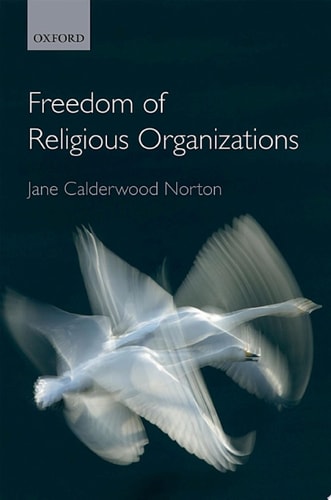
Freedom of Religious Organizations
0
0
As an Amazon Associate and affiliate partner, Menrva Books earns from qualifying purchases. Learn more
Author Description
Religious freedom is now widely accepted as fundamental to any liberal democracy. It is recognised in domestic, regional, and international human rights instruments and its importance is lauded by philosophers, lawyers, judges, clergy, and even politicians. While it is easy to support religious freedom in the abstract, tensions can arise between the activities of religious organizations and the law that challenge this general commitment to religious freedom. Should religious organizations be permitted to discriminate against women or gay people in their employment practices, when admitting members, or in providing goods and services? Should the courts interfere in these organizations to protect the interests of a disaffected member or to resolve internal property disputes? Should the state allow religious tribunals to determine or advise on family matters? While much has been written about religious individuals and the law, there has been a discernible lack of literature on organizations and the law. Jane Norton fills this gap with Freedom of Religious Organizations. By exploring potential conflicts between the law and religious organizations, and examining whether the current British response to such conflicts is justified, this book will consider when English law ought to apply to religious organizations and how these conflicts should be dealt with.
Menrva's Summary
THE THESIS
This book investigates the legal boundaries and jurisdictional conflicts between the autonomy of religious organizations and the mandates of secular law within a liberal democracy. Jane Calderwood Norton, a legal scholar, utilizes a framework of human rights instruments and case law to analyze how English law interacts with religious institutions. She examines the tension between institutional religious freedom and broader societal commitments to equality and non-discrimination. The work argues for a more nuanced approach to determining when state intervention in religious affairs is legally and ethically justified.
THE SCOPE MAP
What You Will Find
- Analysis of employment practices, membership policies, and service provision within religious groups
- Examination of judicial intervention in internal property and membership disputes
- Discussion of the role of religious tribunals in family law matters
- Evaluation of the current British legal response to institutional religious autonomy
Scope Limits
- The analysis is primarily focused on the English legal system and may not apply to other jurisdictions
- The text does not focus on the rights of individual religious practitioners, but rather on the collective rights of organizations
THE AUTHORITY PERSPECTIVE
Legal scholars and practitioners identify this work as a significant contribution to the under-researched area of institutional religious freedom. Readers frequently note the academic density of the prose and the clarity with which the author navigates complex intersections of human rights law.
Page Count:
250
Publication Date:
2016-01-01
Publisher:
OUP Oxford
ISBN-10:
0191004057
ISBN-13:
9780191004056
Religion
Law
Human rights
Professional Career & Trade
Legal Theory
Sociology of Religion