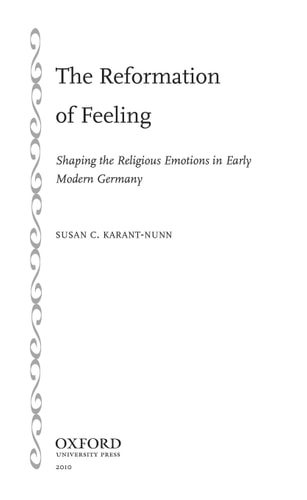
The Reformation of Feeling: Shaping the Religious Emotions in Early Modern Germany
0
0
As an Amazon Associate and affiliate partner, Menrva Books earns from qualifying purchases. Learn more
Author Description
In The Reformation of Feeling, Susan Karant-Nunn looks beyond and beneath the formal doctrinal and moral demands of the Reformation in Germany to examine the emotional tenor of the programs that the emerging creeds-revised Catholicism, Lutheranism, and Calvinism/Reformed theology-developed for their members. As revealed by the surviving sermons from this period, preaching clergy of each faith both explicitly and implicitly provided their listeners with distinct models of a mood to be cultivated. To encourage their parishioners to make an emotional investment in their faith, all three drew upon rhetorical elements that were already present in late medieval Catholicism and elevated them into confessional touchstones.Looking at archival materials containing direct references to feeling, Karant-Nunn focuses on treatments of death and sermons on the Passion. She amplifies these sources with considerations of the decorative, liturgical, musical, and disciplinary changes that ecclesiastical leaders introduced during the period from the late fifteenth to the end of the seventeenth century. Within individual sermons, Karant-Nunn also examines topical elements-including Jews at the crucifixion, the Virgin Mary's voluminous weeping below the Cross, and struggles against competing denominations-that were intended to arouse particular kinds of sentiment. Finally, she discusses surviving testimony from the laity in order to assess at least some Christians' reception of these lessons on proper devotional feeling.This book is exceptional in its presentation of a cultural rather than theological or behavioral study of the broader movement to remake Christianity. As Karant-Nunn conclusively demonstrates, in the eyes of the Reformation's formative personalities strict adherence to doctrine and upright demeanor did not constitute an adequate piety. The truly devout had to engage their hearts in their faith.
Menrva's Summary
THE THESIS
This book investigates how the religious movements of the Reformation in Germany sought to shape and standardize the emotional lives of their adherents beyond mere doctrinal adherence. Susan C. Karant-Nunn, a scholar of early modern European history, analyzes how Lutheran, Calvinist, and revised Catholic clergy utilized sermons, liturgy, and music to cultivate specific emotional responses in their congregations. By examining archival sermon records and lay testimony from the late fifteenth to the late seventeenth century, the author argues that the Reformation was as much a project of emotional engineering as it was a theological shift. The work posits that true piety in this era required an active, heart-felt engagement with faith that ecclesiastical leaders actively sought to manufacture.
THE SCOPE MAP
What You Will Find
- Analysis of emotional models within Lutheran, Calvinist, and revised Catholic traditions.
- Examination of rhetorical strategies used in sermons regarding death and the Passion of Christ.
- Integration of liturgical, musical, and decorative changes as tools for emotional regulation.
- Assessment of lay reception through surviving personal testimonies and archival records.
THE AUTHORITY PERSPECTIVE
Scholars recognize this work as a significant contribution to the cultural history of the Reformation, shifting the focus from abstract theology to the lived experience of religious sentiment. Readers frequently note the academic density of the prose and the meticulous use of primary source materials to support the author's arguments.
Page Count:
352
Publication Date:
2010-04-29
Publisher:
Oxford University Press
ISBN-10:
0195399730
ISBN-13:
9780195399738
History
Religion
Church History
Reformation
Cultural History
Community Tags
Similar Books