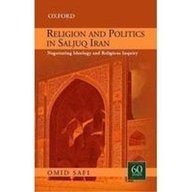
Religion and Politics in Saljuq Iran: Negotiating Ideology and Religious Inquiry
0
0
As an Amazon Associate and affiliate partner, Menrva Books earns from qualifying purchases. Learn more
Author Description
This book explores the complex relationship between the Saljuq state and the religious establishment in Iran during the eleventh and twelfth centuries. Omid Safi examines how political authority and religious inquiry were negotiated, challenging the notion of a monolithic relationship between the state and the ulama. Through a detailed analysis of primary sources, the work highlights the dynamic and often contentious dialogue that shaped the political and religious landscape of the period.
Menrva's Summary
THE THESIS
This work investigates the complex interplay between the Saljuq state and the religious establishment, specifically focusing on how political authority and religious inquiry were negotiated during the eleventh and twelfth centuries. Omid Safi, a scholar of Islamic history, utilizes primary Persian and Arabic sources to challenge the traditional view of a monolithic relationship between the state and the ulama. He argues that the Saljuq period was characterized by a dynamic, often contentious, dialogue where religious scholars actively shaped political ideology while simultaneously navigating the constraints of imperial power.
THE SCOPE MAP
What You Will Find
- Analysis of the political and religious structures of the Saljuq Empire.
- Examination of the role of the madrasa system in institutionalizing religious authority.
- Use of primary source documents including chronicles, biographical dictionaries, and political treatises.
- Exploration of the tension between Sunni orthodoxy and the intellectual diversity of the period.
THE AUTHORITY PERSPECTIVE
Scholars in the field of Islamic history recognize this text as a significant contribution to understanding the institutionalization of religious authority in medieval Iran. Readers frequently note the academic density of the prose, which provides a rigorous examination of the socio-political landscape of the Saljuq era.
Page Count:
292
Publication Date:
2007-01-01
Publisher:
Oxford University Press
ISBN-10:
0195474651
ISBN-13:
9780195474657
Religion
History
Politics
Islamic Studies
Community Tags
Similar Books