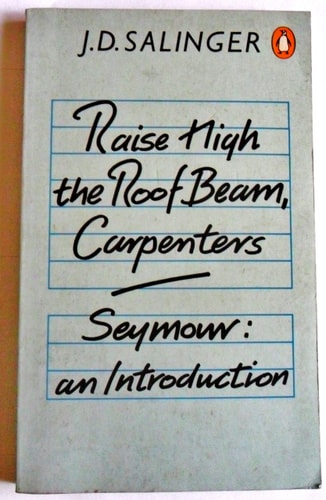
Raise High the Roof Beam, Carpenters and Seymour: An Introduction
0
0
As an Amazon Associate and affiliate partner, Menrva Books earns from qualifying purchases. Learn more
Author Description
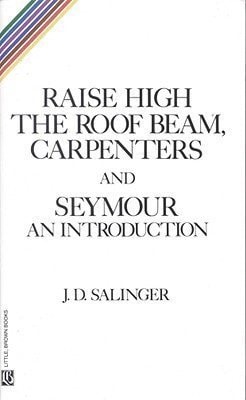
This book contains two separate "Raise High the Roof Beam, Carpenters" is the first, and " An Introduction" is the second."Raise High the Roof Beam, Carpenters" is a story about the Glass family, narrated by Buddy, the second oldest brother. Buddy is attending his brother Seymour's wedding to a gal named Muriel, but he's on Army leave during active duty in World War II. At the wedding, everyone is stunned when Seymour does not show up.The action of the story picks up when several characters end up carpooling together following the failed wedding. The others (the Matron of Honor and her husband, and a couple of stragglers) are talking about Seymour and the disappointment of his not showing up, and Buddy never tells them that he is secretly Seymour's brother, so they talk more openly with him than they otherwise would.They criticize Seymour and speculate about his character flaws and deficiencies, but Buddy finds their assessments quite judgmental and biased. He then decides to tell the car who he really is, shaming them for their loose criticisms.He finds Seymour's journal, and he discovers a strange message from their sister Boo Boo for Seymour on their bathroom "Raise high the roof beam, carpenters. Like Ares comes the bridegroom/ taller far than a tall man." This is a fragment from the Greek poet Sappho." An Introduction" is a kind of elegy for Seymour from Buddy, told in the form of an introduction to the reader. The reader makes Seymour's acquaintance while knowing that Seymour technically isn't alive when the story is published, having killed himself in 1948.This portion of the story is told in stream of consciousness, and it discusses Eastern religious mysticism.
Menrva's Summary
THE PULSE
The sudden disappearance of Seymour Glass from his own wedding ceremony triggers a tense, revealing car ride that exposes the deep-seated prejudices of his wedding guests. Buddy Glass, the narrator and Seymour's brother, observes the vitriol directed at his absent sibling while maintaining his own anonymity. He must navigate the social friction of the carpool while grappling with his internal defense of Seymour's character. The narrative framework shifts from a linear, dialogue-heavy account of the wedding aftermath to a reflective, non-linear elegy that explores the philosophical and spiritual dimensions of Seymour's life.
INSIDE THE PAGES
- First-person narration by Buddy Glass
- Stream of consciousness techniques
- Epistolary elements through journal entries
- Exploration of Eastern religious mysticism
- Character-driven dialogue
- Meta-fictional commentary on the act of writing
- Focus on the Glass family dynamics
- Integration of classical poetry references
THE COLLECTIVE ECHO
Readers and critics frequently note the distinct shift in tone between the two stories, moving from the social satire of the first to the meditative, elegiac quality of the second. Discussion often centers on the complex, often elusive nature of Seymour Glass as a character who exists primarily through the memories and writings of his brother. Many highlight the effectiveness of Salinger's prose in capturing the nuances of familial loyalty and the alienation of the intellectual. The balance between the external conflict of the wedding and the internal, philosophical exploration of Seymour's psyche remains a primary point of analysis for those examining Salinger's broader body of work. Readers often find the stream of consciousness style challenging yet rewarding for its depth of character insight.
Page Count:
158
Publication Date:
1965-01-01
Publisher:
Bantham Books
ISBN-10:
0140022643
ISBN-13:
9780140022643
Literary Fiction
Family Saga
Contemporary
Classics
Short Stories
Modernism
Literary
classic