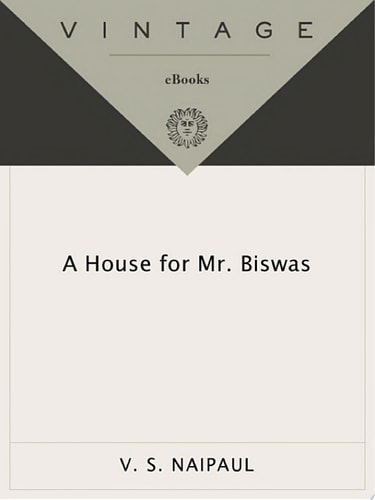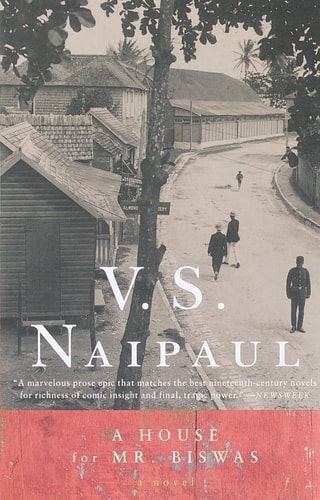
A House for Mr. Biswas
0
0
As an Amazon Associate and affiliate partner, Menrva Books earns from qualifying purchases. Learn more
Author Description
The early masterpiece of V. S. Naipaul’s brilliant career, A House for Mr. Biswas is an unforgettable story inspired by Naipaul's father that has been hailed as one of the twentieth century's finest novels. In his forty-six short years, Mr. Mohun Biswas has been fighting against destiny to achieve some semblance of independence, only to face a lifetime of calamity. Shuttled from one residence to another after the drowning death of his father, for which he is inadvertently responsible, Mr. Biswas yearns for a place he can call home. But when he marries into the domineering Tulsi family on whom he indignantly becomes dependent, Mr. Biswas embarks on an arduous–and endless–struggle to weaken their hold over him and purchase a house of his own. A heartrending, dark comedy of manners, A House for Mr. Biswas masterfully evokes a man’s quest for autonomy against an emblematic post-colonial canvas.
Menrva's Summary
THE PULSE
Mohun Biswas struggles to secure a home of his own while navigating the suffocating influence of his wife's extended family. Born into a family of limited means and marked by an early tragedy, Mr. Biswas spends his life attempting to assert his identity against the crushing weight of tradition and poverty. He finds himself trapped within the Tulsi household, a sprawling, chaotic environment that demands total submission to its matriarchal structure. The narrative follows his decades-long pursuit of independence, utilizing a third-person perspective that balances irony with a detailed examination of his domestic failures and small victories. The world is defined by the rigid social hierarchies of the Indo-Trinidadian community and the physical instability of the various houses he inhabits.
INSIDE THE PAGES
- Detailed exploration of post-colonial social structures
- Satirical depiction of extended family dynamics
- Episodic narrative structure spanning several decades
- Focus on the symbolism of domestic space and architecture
- Integration of cultural traditions and religious practices
- Character-driven development centered on internal and external conflict
- Use of dark humor to highlight tragic circumstances
- Precise observation of class mobility and economic struggle
THE COLLECTIVE ECHO
Discussion often centers on the meticulous characterization of Mr. Biswas and the oppressive atmosphere created by the Tulsi family. Readers frequently highlight the balance between the protagonist's personal frustrations and the broader socio-political context of the setting. Critics often point to the prose as a significant example of mid-twentieth-century literary style, noting its ability to render mundane domestic life with profound significance. The narrative pacing is frequently described as deliberate, allowing for a deep immersion into the protagonist's psyche and his environment. Many readers appreciate the way the text avoids sentimentality while maintaining a clear focus on the human desire for autonomy.
Page Count:
592
Publication Date:
1976-08-26
Publisher:
Penguin Books
ISBN-10:
0140030255
ISBN-13:
9780140030259
Fiction
Literary Fiction
Satire
classic
Caribbean
Post-Colonial