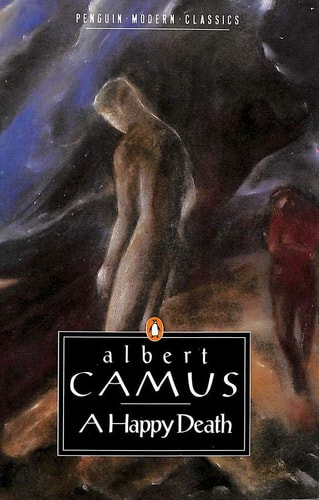
A Happy Death
0
0
As an Amazon Associate and affiliate partner, Menrva Books earns from qualifying purchases. Learn more
Author Description
In his first novel, A Happy Death, written when he was in his early twenties and retrieved from his private papers following his death in I960, Albert Camus laid the foundation for The Stranger, focusing in both works on an Algerian clerk who kills a man in cold blood. But he also revealed himself to an extent that he never would in his later fiction. For if A Happy Death is the study of a rule-bound being shattering the fetters of his existence, it is also a remarkably candid portrait of its author as a young man.As the novel follows the protagonist, Patrice Mersault, to his victim's house -- and then, fleeing, in a journey that takes him through stages of exile, hedonism, privation, and death -it gives us a glimpse into the imagination of one of the great writers of the twentieth century. For here is the young Camus himself, in love with the sea and sun, enraptured by women yet disdainful of romantic love, and already formulating the philosophy of action and moral responsibility that would make him central to the thought of our time.Translated from the French by Richard Howard
Menrva's Summary
THE PULSE
Patrice Mersault, a clerk trapped in a monotonous existence, commits a calculated murder to secure the financial freedom necessary to pursue a life of conscious happiness. Driven by a desire to transcend the constraints of his mundane life, Mersault seeks to master his own destiny through the acquisition of time and solitude. His path leads him through various environments, from the stark reality of his office to the sensory richness of the Mediterranean coast. The narrative follows his internal and external shifts as he attempts to reconcile his physical desires with a burgeoning philosophy of moral autonomy. The text functions as a precursor to later existentialist works, utilizing a third-person perspective to examine the protagonist's detachment from conventional social structures.
INSIDE THE PAGES
- Exploration of existentialist themes regarding individual freedom
- Vivid sensory descriptions of the Algerian landscape and sea
- Examination of the relationship between wealth and personal autonomy
- Protagonist's transition from social conformity to radical isolation
- Philosophical inquiries into the nature of death and consciousness
- Autobiographical elements reflecting the author's early life
- Non-linear progression through stages of exile and hedonism
- Focus on the concept of a conscious, self-determined death
THE COLLECTIVE ECHO
Readers and critics frequently identify this work as a vital precursor to the author's more famous novels, noting its raw and experimental quality. Discussion often centers on the clear parallels between the protagonist's experiences and the author's own formative years in North Africa. Many observers highlight the stark, sun-drenched atmosphere that defines the setting and influences the protagonist's worldview. While some note the prose is less polished than his later output, it is widely regarded as a significant document for understanding the evolution of his philosophical thought. The text is often studied for its candid exploration of the tension between human desire and the indifference of the natural world.
Page Count:
144
Publication Date:
1973-01-01
Publisher:
Penguin Books
ISBN-10:
0140036989
ISBN-13:
9780140036985
Literary Fiction
Existentialism
Philosophical
British & Irish
classic
Humor & Satire
Genre Fiction
Medical