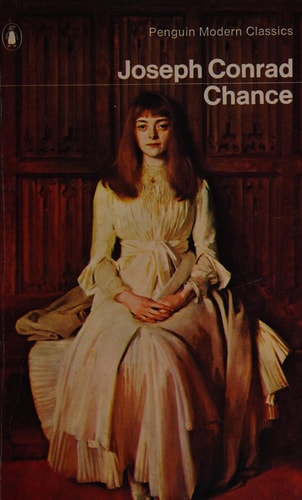
Chance
0
0
As an Amazon Associate and affiliate partner, Menrva Books earns from qualifying purchases. Learn more
Author Description
Heroine Flora de Barral is the daughter of a convicted swindler who finds she must rely on the generosity of others, most of whom resent her or have other agendas. She runs away and marries, but is her escape just another form of prison?
Menrva's Summary
THE PULSE
Flora de Barral, the daughter of a disgraced financier, struggles to navigate a society that views her through the lens of her father's criminal reputation. After her father's imprisonment, Flora finds herself at the mercy of predatory guardians and social outcasts who harbor ulterior motives. She eventually enters a marriage with Captain Roderick Anthony, yet she remains uncertain whether this union provides genuine sanctuary or merely a different configuration of confinement. The narrative employs a complex, multi-layered perspective, primarily filtered through the observations of the narrator, Marlow, who pieces together the events through various testimonies.
INSIDE THE PAGES
- Multi-layered, non-linear narrative structure
- Use of an unreliable or secondary narrator, Marlow
- Exploration of social isolation and reputation
- Critique of Victorian gender roles and economic dependency
- Psychological depth regarding trauma and trust
- Intricate, dense prose style characteristic of late-period Conrad
- Focus on the moral ambiguity of the supporting characters
- Examination of the concept of 'chance' in shaping human destiny
THE COLLECTIVE ECHO
Readers and critics often note the technical complexity of the narrative structure, which requires patience to untangle the various perspectives. Discussion frequently centers on the characterization of Flora, whose internal state is often obscured by the external observations of the narrators. Many highlight the thematic focus on the fragility of human connections and the influence of external circumstances on individual agency. While some find the pacing deliberate and slow, others appreciate the psychological acuity Conrad brings to the study of social alienation. The work remains a subject of debate regarding its portrayal of gender dynamics and the effectiveness of its indirect storytelling method.
Page Count:
367
Publication Date:
1984-06-05
Publisher:
Penguin Classic
ISBN-10:
0140038213
ISBN-13:
9780140038217
Literary Fiction
Psychological
Edwardian
Victorian
classic
British & Irish
New Used & Rental Textbooks
Community Tags
Other Editions(28)
Minerva Heritage
2024
Default edition
Independently published
2024

Independently Published
2021

Independently Published
2021

Independently Published
2021

Independently Published
2021

Independently Published
2020

Independently Published
2020

Independently Published
2019

Independently Published
2019

Independently Published
2019
Blurb, Incorporated
2019

Amazon Digital Services LLC - KDP Print US
2018

CreateSpace Independent Publishing Platform
2018

CreateSpace Independent Publishing Platform
2018

CreateSpace Independent Publishing Platform
2016

CreateSpace Independent Publishing Platform
2016

CreateSpace Independent Publishing Platform
2016

CreateSpace Independent Publishing Platform
2015

CreateSpace Independent Publishing Platform
2015

CreateSpace Independent Publishing Platform
2014

CreateSpace Independent Publishing Platform
2013

Charles River Editors
2012

ReadHowYouWant.com
2007

eBooksLib
2005

OUP Oxford
2002

ReadHowYouWant.com
2001
Penguin Classic
1984
Similar Books



Reader Comments
Share Your Thoughts
No comments yet. Be the first to share your thoughts!