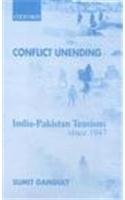
Conflict Unending: India-Pakistan Relations since 1947
0
0
As an Amazon Associate and affiliate partner, Menrva Books earns from qualifying purchases. Learn more
Author Description
The escalating tensions between India and Pakistan have received renewed attention of late. Since their genesis in 1947, the nations of India and Pakistan have been locked in a seemingly endless spiral of hostility over the disputed territory of Kashmir. Ganguly asserts that the two nations remain mired in conflict due to inherent features of their nationalist agendas. Indian nationalist leadership chose to hold on to this Muslim-majority state to prove that minorities could thrive in a plural, secular polity. Pakistani nationalists argued with equal force that they could not part with Kashmir as part of the homeland created for the Muslims of South Asia. Ganguly authoritatively analyzes why hostility persists even after the dissipation of the pristine ideological visions of the two states and discusses their dual path to overt acquisition of nuclear weapons, as well as the current prospects for war and peace in the region.
Menrva's Summary
THE THESIS
This work investigates the persistent, multi-generational hostility between India and Pakistan, questioning why the conflict remains unresolved despite shifting geopolitical landscapes. Sumit Ganguly, a prominent scholar of South Asian politics, utilizes historical analysis and political theory to examine the nationalist agendas of both states. He argues that the dispute over Kashmir is not merely territorial but is rooted in the foundational identity claims of both nations, which continue to drive their foreign policies and nuclear posturing.
THE SCOPE MAP
What You Will Find
- Historical analysis of the India-Pakistan relationship from the 1947 partition to the modern era.
- Examination of the ideological motivations behind the Kashmir dispute.
- Assessment of the nuclear proliferation trajectories of both nations.
- Evaluation of the current geopolitical prospects for regional stability and conflict resolution.
THE AUTHORITY PERSPECTIVE
Experts recognize this text as a foundational resource for understanding the structural causes of South Asian regional instability. Readers frequently note the clarity of the author's arguments regarding the intersection of nationalist identity and nuclear deterrence.
Page Count:
187
Publication Date:
2002-01-01
Publisher:
OUP India
ISBN-10:
0195651901
ISBN-13:
9780195651904
History
India
International relations
Military History
Community Tags
Similar Books