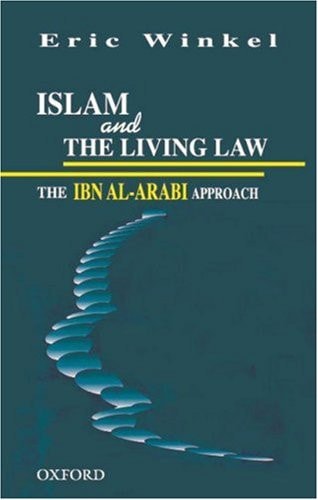
Islam and the Living Law: The Ibn al-Arabi Approach
0
0
As an Amazon Associate and affiliate partner, Menrva Books earns from qualifying purchases. Learn more
Author Description
Ibn Al Arabi, the mystic scholar of the 13th century, highlights the ambiguities of language and the polysemantic, multifaceted text of the Quran. With Al Arabi's help, Winkel expounds how narrowly religion is interpreted by most scholars. Al Arabi disturbs the comfort of man-made religion by his reflections on language, and Winkel's book takes up the same challenge.
Menrva's Summary
THE THESIS
This work investigates how the 13th-century mystic Ibn al-Arabi’s approach to language and the Quran can provide a framework for reinterpreting Islamic law in a modern context. Eric Winkel, a Senior Fulbright Scholar, utilizes a synthesis of Orthodox Ash'ari viewpoints, Sufism, and Fiqh to challenge contemporary, narrow interpretations of religious texts. By examining the polysemantic nature of the Quran, the author argues for a more fluid and creative implementation of Shariah that accounts for the complexities of modern Muslim society.
THE SCOPE MAP
What You Will Find
- An analysis of the linguistic ambiguities inherent in the Quranic text.
- A synthesis of traditional Ash'ari theology, Sufi mysticism, and Islamic jurisprudence.
- A critique of rigid, man-made religious interpretations that dominate current discourse.
- A proposed methodology for reconciling historical Islamic legal frameworks with contemporary societal needs.
THE AUTHORITY PERSPECTIVE
Critics and scholars note that this text provides a significant contribution to the discourse on Islamic legal reform by bridging the gap between mystical tradition and practical application. Readers frequently highlight the author's ability to integrate complex theological concepts into a cohesive argument for modern religious practice.
Page Count:
128
Publication Date:
1996-01-01
Publisher:
Oxford University Press
ISBN-10:
0195776909
ISBN-13:
9780195776904
Religion
Philosophy
Islam
Islamic Law
Theology
Law
Sufism