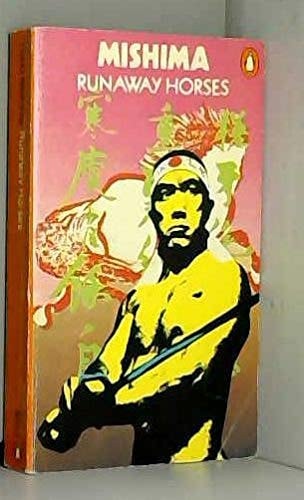
Runaway Horses
0
0
As an Amazon Associate and affiliate partner, Menrva Books earns from qualifying purchases. Learn more
Author Description
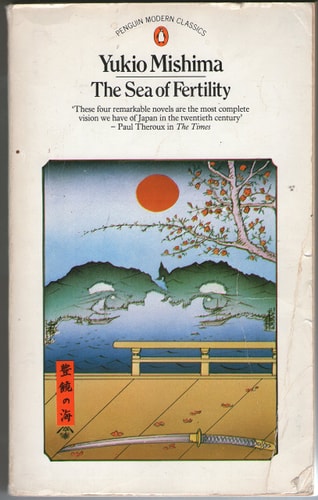
Yukio Mishima’s Runaway Horses is the second novel in his masterful tetralogy, The Sea of Fertility. Again we encounter Shigekuni Honda, who narrates this epic tale of what he believes are the successive reincarnations of his childhood friend Kiyoaki Matsugae. In 1932, Shigeuki Honda has become a judge in Osaka. Convinced that a young rightist revolutionary, Isao, is the reincarnation of his friend Kiyoaki, Honda commits himself to saving the youth from an untimely death. Isao, driven to patriotic fanaticism by a father who instilled in him the ethos of the ancient samurai, organizes a violent plot against the new industrialists who he believes are usurping the Emperor’s rightful power and threatening the very integrity of the nation. Runaway Horses is the chronicle of a conspiracy — a novel about the roots and nature of Japanese fanaticism in the years that led to war.
Menrva's Summary
THE PULSE
A young radical’s commitment to a violent nationalist plot forces a judge to confront the possibility that his deceased friend has been reincarnated in a dangerous new form. Shigekuni Honda, now a middle-aged judge, observes Isao Iinuma, a charismatic martial artist who embodies the fanatical spirit of the samurai. Honda attempts to intervene in Isao’s trajectory toward self-destruction, driven by the belief that the boy is the second incarnation of his late friend, Kiyoaki Matsugae. The narrative unfolds against the backdrop of 1930s Japan, where economic modernization clashes with traditionalist fervor, creating a volatile environment that dictates the characters' fatalistic choices.
INSIDE THE PAGES
- Exploration of the Shinto-influenced concept of reincarnation
- Detailed depiction of 1930s Japanese political radicalism
- Contrast between industrial capitalism and agrarian traditionalism
- Integration of samurai ethics and the bushido code
- Third-person limited perspective focusing on Honda and Isao
- Slow-burn pacing that builds toward a climactic act of violence
- Rich, atmospheric descriptions of the Japanese landscape and seasons
- Philosophical inquiries into the nature of purity and sacrifice
THE COLLECTIVE ECHO
Readers and critics frequently highlight the prose as both precise and evocative, capturing the tension between aesthetic beauty and political brutality. Discussion often centers on the contrast between Honda’s detached, observational role and Isao’s intense, singular focus on his mission. Many note that the novel effectively illustrates the psychological roots of fanaticism without resorting to simple moral judgment. The pacing is often described as deliberate, allowing the philosophical arguments regarding the Emperor and the nation to permeate the narrative. Readers appreciate how the text functions as both a character study and a broader examination of a nation moving toward war.
Page Count:
400
Publication Date:
1977-01-01
Publisher:
Penguin
ISBN-10:
0140041672
ISBN-13:
9780140041675
Historical Fiction
Philosophical
Political fiction
Tragedy