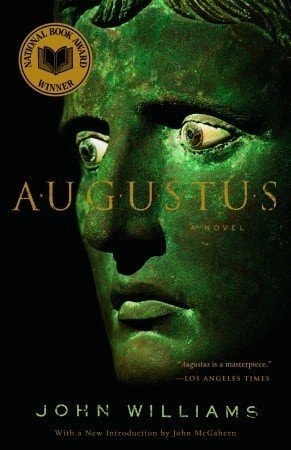
Augustus: A Novel
0
0
As an Amazon Associate and affiliate partner, Menrva Books earns from qualifying purchases. Learn more
Author Description
A brilliant and beautifully written novel in the tradition of Robert Graves' I, Claudius, Augustus is a sweeping narrative that brings vividly to life a compelling cast of historical figures through their letters, dispatches, and memoirs. A mere eighteen years of age when his uncle, Julius Caesar, is murdered, Octavius Caesar prematurely inherits rule of the Roman Republic. Surrounded by men who are jockeying for power-Cicero, Brutus, Cassius, and Mark Antony-young Octavius must work against the powerful Roman political machinations to claim his destiny as first Roman emperor. Sprung from meticulous research and the pen of a true poet, Augustus tells the story of one man's dream to liberate a corrupt Rome from the fancy of the capriciously crooked and the wildly wealthy.
Menrva's Summary
THE PULSE
Following the assassination of Julius Caesar, eighteen-year-old Octavius must navigate a treacherous political landscape to secure his inheritance and transform the Roman Republic into an empire. Thrust into a power vacuum, the young protagonist faces opposition from established figures such as Cicero, Brutus, Cassius, and Mark Antony. He must employ strategic maneuvering and political acumen to outwit those who seek to maintain the status quo or seize control for themselves. The narrative utilizes an epistolary framework, presenting the rise of the first Roman emperor through a collection of letters, dispatches, and memoirs.
INSIDE THE PAGES
- Epistolary narrative structure using primary source-style documents
- Focus on the transition from Roman Republic to Roman Empire
- Character-driven exploration of political machinations
- Inclusion of major historical figures including Julius Caesar and Mark Antony
- Examination of the corruption inherent in Roman power structures
- Meticulous attention to historical setting and period detail
- First-person perspectives from multiple historical actors
- Thematic focus on the cost of leadership and ambition
THE COLLECTIVE ECHO
Readers and critics often compare this work to classic historical fiction for its immersive atmosphere and structural complexity. Discussion frequently centers on the effectiveness of the epistolary format in humanizing figures who are often relegated to dry historical records. Many highlight the author's ability to balance political intrigue with the personal development of Octavius as he matures into a ruler. The pacing is noted for being deliberate, favoring character depth and historical context over rapid action sequences. Overall, the text is recognized for its commitment to recreating the social and political climate of ancient Rome with precision.
Page Count:
310
Publication Date:
1979-08-30
Publisher:
Penguin Books
ISBN-10:
0140051279
ISBN-13:
9780140051278
Historical Fiction
Historical
Biographical fiction
Literary
Ancient - Rome
Genre Fiction
Political fiction
Community Tags
Similar Books