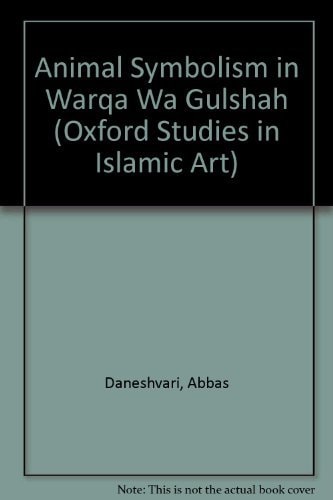
Animal Symbolism in Warqa wa Gulshah
0
0
As an Amazon Associate and affiliate partner, Menrva Books earns from qualifying purchases. Learn more
Author Description
In this study of the iconography of the animals in the miniature cycle of a 13th-century Persian manuscript, the author uses literary sources to identify the symbolic characteristics associated with animals such as the Cat, the Dog, and the Falcon in medieval Islam. Dr. Daneshvari demonstrates how the artist introduced specific animals into his miniatures in order to highlight the drama of the narrative.
Menrva's Summary
THE THESIS
*This study investigates the symbolic function and iconographic significance of animals within the 13th-century Persian manuscript Warqa wa Gulshah.* Abbas Daneshvari, an expert in Islamic art history, utilizes a combination of medieval literary sources and visual analysis to argue that the inclusion of specific creatures was a deliberate narrative device. By examining the interplay between text and image, the author demonstrates how the artist employed animal motifs to heighten the dramatic tension and thematic depth of the manuscript's romantic narrative.
THE SCOPE MAP
What You Will Find
- Iconographic analysis of specific animals including the cat, the dog, and the falcon.
- Examination of 13th-century Persian miniature painting techniques and visual conventions.
- Integration of medieval Islamic literary texts to decode symbolic meanings.
- Evaluation of how visual elements serve to underscore narrative drama and character motivation.
THE AUTHORITY PERSPECTIVE
Scholars and art historians frequently cite this work as a foundational text for understanding the intersection of zoomorphic symbolism and medieval Persian manuscript illumination. Readers often note the academic density of the prose, which provides a rigorous framework for interpreting complex visual narratives in Islamic art.
Page Count:
92
Publication Date:
1986-10-16
Publisher:
Oxford University Press
ISBN-10:
0197280048
ISBN-13:
9780197280041
Islamic Art
In art
Art History
Symbolism
Iconography