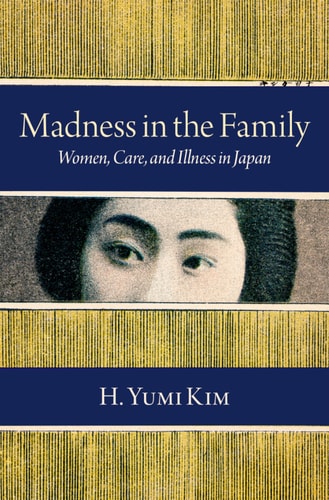
Madness in the Family: Women, Care, and Illness in Japan
0
0
As an Amazon Associate and affiliate partner, Menrva Books earns from qualifying purchases. Learn more
Author Description
To fend off American and European imperialism in the nineteenth century, Japan strove to strengthen itself by drawing on the most updated ideas and practices from around the world. By the 1880s, this included the introduction of Western-derived psychiatry and its ideas about mental illness. The first Japanese psychiatrists claimed that mental illnesses required medical treatment in specialized institutions rather than confinement at home, as had been common practice. Yet the state implemented no social welfare policies to make new medical services more accessible and affordable to the public. The family, especially women, thus continued to carry the burden of caring for those considered mad.Madness in the Family examines how the family in Japan came to be seen as the natural provider of care for those suffering from mental illnesses. It centers on the experiences of women and families, which have long been obscured by the voices of male psychiatrists, state officials, and lawmakers. H. Yumi Kim traces how women and families negotiated a dizzying array of claims about madness and its proper management across various settings. In the countryside, psychiatrists tried to refute the notion that fox spirits could cause madness, and the government regulated the use of cage-like structures inside homes. In cities, a booming medical marketplace spread ideas about feminized illnesses such as hysteria, and female defendants were evaluated for menstruation-induced disorders. As women and families navigated this shifting therapeutic landscape, they produced their own gendered approaches to madness that would take precedence over the claims of psychiatry, the law, and the state in everyday life.Decoupling the history of mental illness from the discipline and institutions of psychiatry, Madness in the Family reveals the power and fragilities of gender, kinship, and care in the creation of different modes of caring for and understanding mental illness that persist to this day.
Menrva's Summary
THE THESIS
This book investigates how the Japanese family, specifically women, became the primary caregivers for the mentally ill following the introduction of Western psychiatry in the late nineteenth century. H. Yumi Kim, a scholar of Japanese history, utilizes archival records, medical literature, and legal documents to challenge the narrative that psychiatry alone defined mental health management. She argues that the state's failure to provide social welfare forced families to develop their own gendered caregiving practices, which often superseded official medical and legal directives.
THE SCOPE MAP
What You Will Find
- Analysis of the transition from home-based confinement to institutional psychiatry in Meiji-era Japan.
- Examination of the gendered expectations placed on women within the domestic sphere regarding mental health care.
- Case studies of rural and urban responses to psychiatric theories, including the regulation of home-based care structures.
- Investigation into the intersection of medical discourse, legal evaluation, and cultural beliefs about madness.
THE AUTHORITY PERSPECTIVE
Experts recognize this work as a significant contribution to the social history of medicine and gender in East Asia. Scholars frequently highlight the author's ability to center marginalized voices while providing a nuanced critique of institutional psychiatric development.
Page Count:
246
Publication Date:
2022-01-01
Publisher:
Oxford University Press
ISBN-10:
0197507379
ISBN-13:
9780197507377
History
Psychiatry
Asian History
Allied Health
Sociology
Medical
Modern History
Medicine history
Gender Studies
Japan
MEDICAL History
Community Tags
Similar Books