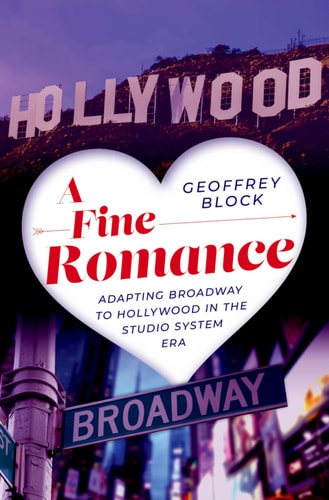
A Fine Romance: Adapting Broadway to Hollywood in the Studio System Era
0
0
As an Amazon Associate and affiliate partner, Menrva Books earns from qualifying purchases. Learn more
Author Description
How do we compare a Broadway musical to its Hollywood counterpart? A Fine Romance: Adapting Broadway to Hollywood in the Studio System Era answers this question by exploring the symbiotic relationship between a dozen Broadway musicals and their Hollywood film adaptations. From enduring classics like Oklahoma!, Brigadoon, and West Side Story to lesser-known gems such as Cabin in the Sky, Call Me Madam, and Silk Stockings, author Geoffrey Block examines some of the best loved stage and screen musicals of all time as well as neglected works that deserve our attention and respect.Block delves into what happens during the transfer of stories from stage to film, the critical criteria that motivates decisions to alter or preserve stage elements when adapting to film, and the dramatic and musical consequences at play in these artistic and commercial choices. In telling this story, A Fine Romance engages with aesthetic and critical concerns while also considering the social issues around Broadway and Hollywood film through the lenses of race and ethnicity, class, gender, and sexual identity. Beginning with the stage debut of Show Boat in 1927 and concluding with the release of Bob Fosse's cinematic re-envisioning of Cabaret nearly a half century later in 1972, the romance between Broadway and Hollywood was frequently turbulent. Differing commercial and aesthetic models and goals of Broadway and Hollywood created both conflicting and harmonious collaborations. Attempts at economic and artistic domination, irreconcilable differences, and occasional broken promises ensued. At other times, the screen and stage creative teams aligned, resulting in well-crafted, much admired, and frequently breathtaking films.
Menrva's Summary
THE THESIS
This book investigates the complex artistic and commercial dynamics involved in the adaptation of Broadway musicals into Hollywood films during the studio system era. Author Geoffrey Holden Block, a musicologist and theater historian, utilizes a comparative framework to analyze how creative teams navigated the transition from stage to screen. By examining the specific choices made during these adaptations, Block argues that the relationship between these two mediums was defined by a tension between aesthetic preservation and the demands of commercial viability.
THE SCOPE MAP
What You Will Find
- A comparative analysis of twelve specific Broadway-to-film adaptations including Oklahoma!, West Side Story, and Cabaret.
- An examination of the economic and aesthetic models that governed the studio system era.
- A critical look at how social issues such as race, class, gender, and sexual identity were handled during the adaptation process.
- A historical timeline spanning from the 1927 debut of Show Boat to the 1972 release of Cabaret.
THE AUTHORITY PERSPECTIVE
Scholars and music historians recognize this work as a rigorous examination of the intersection between stage and screen production. Readers frequently note the academic depth of the analysis, which provides a foundational understanding of the structural challenges inherent in musical adaptation.
Page Count:
368
Publication Date:
2023-01-01
Publisher:
Oxford University Press
ISBN-10:
0197501753
ISBN-13:
9780197501757
Music
History
Film Adaptations
Musical Films
Film
Theater
Humanities
Musicals
Criticism history
Community Tags
Similar Books