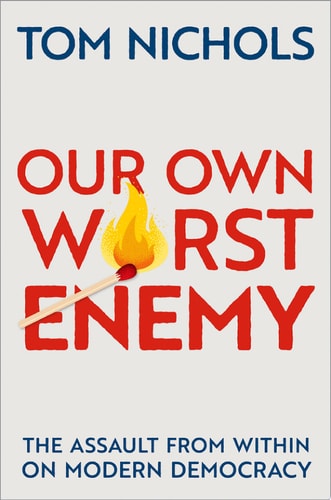
Our Own Worst Enemy: The Assault from within on Modern Democracy
0
0
As an Amazon Associate and affiliate partner, Menrva Books earns from qualifying purchases. Learn more
Author Description
A contrarian yet highly engaging account of the spread of illiberal and anti-democratic sentiment throughout our culture that places responsibility on the citizens themselves.Over the past three decades, citizens of democracies who claim to value freedom, tolerance, and the rule of law have increasingly embraced illiberal politicians and platforms. Democracy is in trouble--but who is really to blame?In Our Own Worst Enemy, Tom Nichols challenges the current depictions of the rise of illiberal and anti-democratic movements in the United States and elsewhere as the result of the deprivations of globalization or the malign decisions of elites. Rather, he places the blame for the rise of illiberalism on the people themselves. Nichols traces the illiberalism of the 21st century to the growth of unchecked narcissism, rising standards of living, global peace, and a resistance to change. Ordinary citizens, laden with grievances, have joined forces with political entrepreneurs who thrive on the creation of rage rather than on the encouragement of civic virtue and democratic cooperation. While it will be difficult, Nichols argues that we need to defend democracy by resurrecting the virtues of altruism, compromise, stoicism, and cooperation--and by recognizing how good we've actually had it in the modern world.Trenchant, contrarian, and highly engaging, Our Own Worst Enemy reframes the debate about how democracies have ended up in this dire state of affairs and what to do about it.
Menrva's Summary
THE THESIS
This book investigates the paradox of why citizens in stable, prosperous democracies are increasingly turning toward illiberalism and anti-democratic political movements. Tom Nichols, a professor and seasoned political commentator, utilizes historical analysis and sociological observation to argue that the decline of democratic norms is not merely the fault of elites or globalization, but a direct result of citizen narcissism and a refusal to accept the responsibilities of civic life. He posits that modern comfort and peace have fostered a culture of grievance that political entrepreneurs exploit to dismantle democratic cooperation.
THE SCOPE MAP
What You Will Find
- Analysis of the psychological shift toward unchecked narcissism in Western populations.
- Examination of how rising standards of living and global peace contribute to political apathy and entitlement.
- Critique of the role of political entrepreneurs in manufacturing rage to gain power.
- Proposed framework for restoring democratic health through the cultivation of stoicism, altruism, and compromise.
THE AUTHORITY PERSPECTIVE
Experts and political observers frequently note the provocative nature of Nichols' argument, which shifts the focus from systemic failures to individual responsibility. The text is widely regarded as a significant contribution to the discourse on democratic backsliding, offering a clear and accessible critique for general readers and students of political science alike.
Page Count:
263
Publication Date:
2021-01-01
Publisher:
Oxford University Press
ISBN-10:
0197518893
ISBN-13:
9780197518892
Politics
Sociology
Comparative Politics
Democracy
Current Affairs
Community Tags
Similar Books