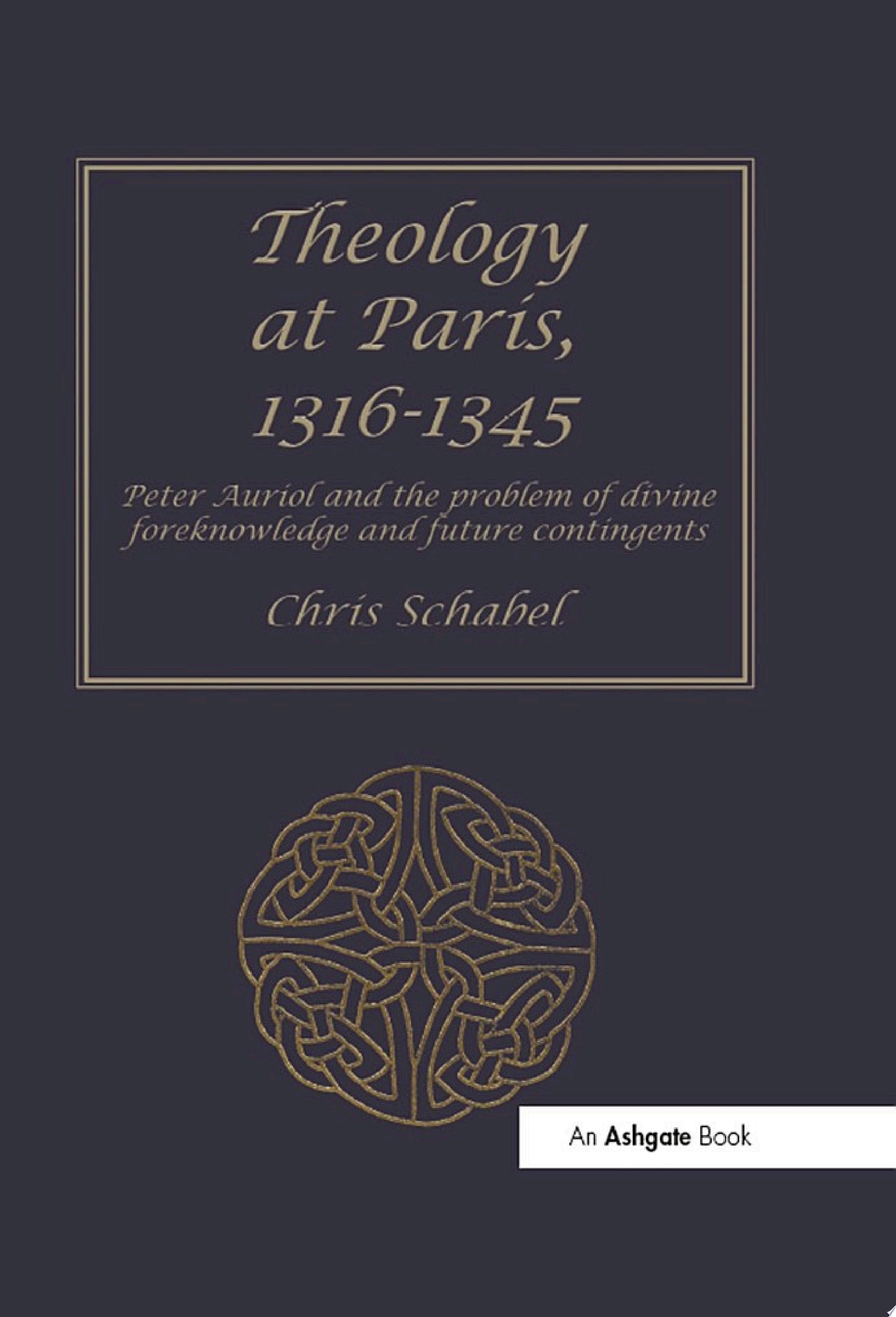
Theology at Paris, 1316–1345
0
0
As an Amazon Associate and affiliate partner, Menrva Books earns from qualifying purchases. Learn more
Author Description
Chris Schabel presents a detailed analysis of the radical solution given by the Franciscan Peter Auriol to the problem of reconciling divine foreknowledge with the contingency of the future, and of contemporary reactions to it. Auriol's solution appeared to many of his contemporaries to deny God's knowledge of the future altogether, and so it provoked intense and long-lasting controversy; Schabel is the first to examine in detail the philosophical and theological background to Auriol's discussion, and to provide a full analysis of Auriol's own writings on the question and the immediate reactions to them. This book sheds new light both on one of the central philosophical debates of the Middle Ages, and on theology and philosophy at the University of Paris in the first half of the 14th century, a period of Parisian intellectual life which has been largely neglected until now.
Menrva's Summary
THE THESIS
This book investigates Peter Auriol's controversial solution to the problem of divine foreknowledge and future contingency. Schabel examines the philosophical and theological context of Auriol's work, focusing on his radical proposal that appeared to deny God's knowledge of the future. The book provides a comprehensive analysis of Auriol's writings and the immediate reactions they provoked, shedding new light on a central medieval philosophical debate. It also illuminates the largely neglected intellectual landscape of the University of Paris in the early 14th century.
THE SCOPE MAP
- Analysis of Peter Auriol's Franciscan theological perspective
- Detailed examination of the reconciliation of divine foreknowledge with future contingency
- Exploration of contemporary reactions to Auriol's solution
- Investigation into the philosophical and theological background of Auriol's arguments
- Full analysis of Auriol's own writings on the subject
- Focus on the intellectual life at the University of Paris (1316-1345)
- Sheds new light on central philosophical debates of the Middle Ages
THE AUTHORITY PERSPECTIVE
The book offers a detailed analysis of Peter Auriol's theological contributions, particularly his solution to the problem of divine foreknowledge and future contingency. It highlights the controversy Auriol's ideas generated among his contemporaries, who felt he denied God's knowledge of the future. Schabel's work is noted as the first to thoroughly examine the philosophical and theological underpinnings of Auriol's arguments and the immediate responses to them. The study is positioned to illuminate both a key medieval philosophical debate and a previously under-explored period of intellectual activity at the University of Paris.
Page Count:
382
Publication Date:
2021-12-24
Publisher:
Taylor & Francis
ISBN-10:
135187988X
ISBN-13:
9781351879880
Non-Fiction
History
Philosophy
Theology
Intellectual History
Community Tags
Similar Books