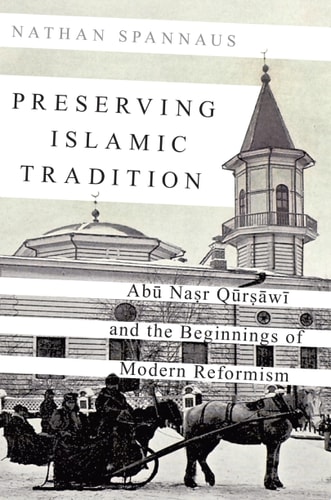
Preserving Islamic Tradition
0
0
As an Amazon Associate and affiliate partner, Menrva Books earns from qualifying purchases. Learn more
Author Description
The End Of The Eighteenth Century Was A Transformational Period For The Muslim Communities Of The Russian Empire And Their Relationship With The Tsarist State. Though They Had Been Under Russian Rule Since The Sixteenth Century, It Was At This Time That They Were Incorporated Into The Imperial Bureaucracy, Most Significantly Through The Founding Of An Official Hierarchy For The Islamic Religious Scholars In 1788. The Introduction Of A State-backed Structure For Muslim Religious Institutions Altered Islamic Religious Authority And, In Turn, Religious Discourse. One Of The Major Figures To Emerge From This New Context Was Abu Nasr Qursawi (1776-1812). A Controversial Figure Who Was Condemned For Heresy In Bukhara In 1808, Qursawi Put Forward A Sweeping Reform Of The Islamic Scholarly Tradition. Focusing On Taqlid, The Principle Of Conformity To Established Doctrine, Qursawi Argued That Its Overuse Had Weakened Scholarship In The Areas Of Islamic Law (fiqh) And Theology (kalam) And Undermined Scholars' Ability To Serve As Religious Guides. In Preserving Islamic Tradition, Nathan Spannaus Presents The First Detailed Analysis Of Qursawi's Reformist Project, Both In Its Contours And Broad Historical Setting. Spannaus Shows How State Control Of Muslim Institutions Impacted Religious Discourse, But Also How It Altered The Entire Religious Environment Into The Twentieth Century. Addressing Issues Of Modernity, Secularity, Tradition, And Intellectual History, Preserving Islamic Tradition Demonstrates How The Interaction With A European Imperial State Transformed The Islamic Tradition, Both Directly And Indirectly, And Elicited New Forms Of Religious Thought And Discourse.
Menrva's Summary
THE THESIS
This work investigates how the integration of Muslim communities into the Russian imperial bureaucracy at the end of the eighteenth century fundamentally reshaped Islamic religious authority and intellectual discourse. Nathan Spannaus, a scholar of Islamic intellectual history, utilizes the life and reformist project of Abu Nasr Qursawi as a primary case study. By examining Qursawi's critique of taqlid, or the conformity to established doctrine, the author argues that state-sponsored institutional changes forced a re-evaluation of Islamic law and theology that persisted well into the twentieth century.
THE SCOPE MAP
What You Will Find
- An analysis of the 1788 founding of the official hierarchy for Islamic religious scholars in the Russian Empire.
- A detailed examination of Abu Nasr Qursawi's theological and legal reform proposals.
- A historical framework connecting European imperial state structures to the evolution of Islamic religious thought.
Scope Limits
- The study focuses primarily on the Russian imperial context and does not provide a comprehensive global history of Islamic reform movements.
- The analysis is limited to the period spanning the late eighteenth century through the early twentieth century.
THE AUTHORITY PERSPECTIVE
Scholars in the field of Islamic studies recognize this text as a significant contribution to the understanding of how imperial state structures influence religious intellectual development. Readers frequently note the academic rigor and the specific focus on the intersection of Russian imperial policy and Islamic scholarly tradition.
Page Count:
320
Publication Date:
2019-01-01
Publisher:
Oxford University Press
ISBN-10:
0190251794
ISBN-13:
9780190251796
Religion
History
Islamic Studies
Russian Empire
Theology
Intellectual History
Community Tags
Similar Books