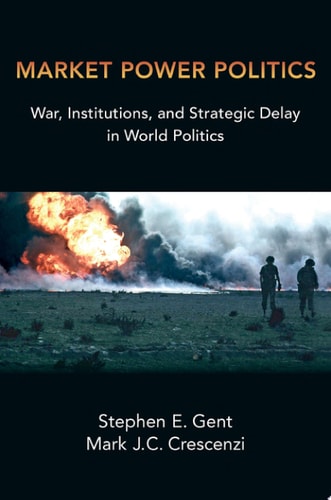
Market Power Politics
0
0
As an Amazon Associate and affiliate partner, Menrva Books earns from qualifying purchases. Learn more
Author Description
A New Theory Of Market Power Politics That Explains When And Why States Will Delay Cooperation Or Even Fight Wars In Pursuit Of This Elusive Goal. How Are The Iraqi Invasion Of Kuwait, The Russian Incursions Into Ukraine And Georgia, And China's Occupation Of Islands In The South China Sea Related? All Three Of These Important Moments In Modern History Were Driven By The Motivation To Capture Market Power. Whether It Was Oil For Iraq, Natural Gas For Russia, Or Rare Earth Elements For China, The Goal Isn't Just The Commodities Themselves--it Is The Ability To Determine Their Price On The Global Market. In Market Power Politics, Stephen Gent And Mark Crescenzi Develop A New Theory Of Market Power Politics That Explains When And Why States Will Delay Cooperation Or Even Fight Wars In Pursuit Of This Elusive Goal. Empirically Examining Case Studies From Different Regions Of The World, They Explore How Competition Between States Over Market Power Can Create Disruptions In The Global Political Economy And Potentially Lead To Territorial Aggression And War. They Also Provide Clear Policy Recommendations, Urging International Institutions To Establish Norms That Reduce The Potential For Open Conflict. Ultimately, Market Power Politics Shows That Nations' Desire To Increase Their Market Power Means That The Push For Territorial Expansion Will Continue To Shape The Trajectory Of World Politics.
Menrva's Summary
THE THESIS
This book investigates the core question of why states prioritize the acquisition of market power over international cooperation, often resorting to territorial aggression and war to achieve it. Authors Mark J.C. Crescenzi and Stephen E. Gent, both established scholars in international relations, utilize a combination of political economy theory and historical case studies to argue that the desire to control global commodity pricing is a primary driver of modern state conflict. They present a framework that links the pursuit of strategic resources—such as oil, natural gas, and rare earth elements—to the destabilization of the global political economy. By analyzing these motivations, the authors provide a systematic explanation for why nations engage in territorial expansion despite the high costs of conflict.
THE SCOPE MAP
What You Will Find
- A theoretical framework linking market power to territorial aggression and state conflict.
- Comparative case studies including the Iraqi invasion of Kuwait, Russian incursions into Ukraine and Georgia, and Chinese maritime expansion.
- Analysis of the global political economy regarding commodity pricing and resource control.
- Policy recommendations for international institutions to mitigate the risks of open conflict through new norms.
THE AUTHORITY PERSPECTIVE
Experts in international relations identify this work as a significant contribution to the study of economic statecraft and conflict theory. Readers frequently note the clarity of the authors' arguments, which effectively bridge the gap between complex economic incentives and observable geopolitical outcomes.
Page Count:
0
Publication Date:
2021-01-01
Publisher:
Oxford University Press
ISBN-10:
0197529828
ISBN-13:
9780197529829
History
Economics
Geopolitics
International relations
Community Tags
Similar Books