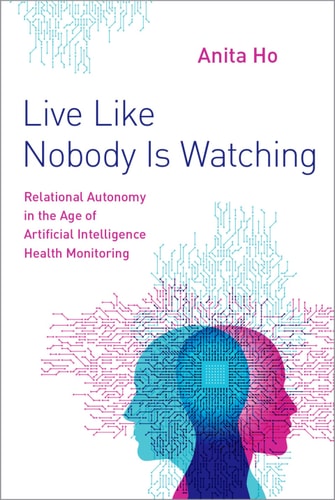
Live Like Nobody Is Watching: Relational Autonomy in the Age of Artificial Intelligence Health Monitoring
0
0
As an Amazon Associate and affiliate partner, Menrva Books earns from qualifying purchases. Learn more
Author Description
Respect for patient autonomy and data privacy are generally accepted as foundational western bioethical values. Nonetheless, as our society embraces expanding forms of personal and health monitoring, particularly in the context of an aging population and the increasing prevalence of chronic diseases, questions abound about how artificial intelligence (AI) may change the way we define or understand what it means to live a free and healthy life. Who should have access to our health and recreational data and for what purpose? How can we find a balance between users' physical safety and their autonomy? Should we allow individuals to forgo continuous health monitoring, even if such monitoring may minimize injury risks and confer health and societal benefits? Would being continuously watched by connected devices ironically render patients more isolated and their data more exposed than ever?Drawing on different use cases of AI health monitoring, this book explores the socio-relational contexts that frame the promotion of AI health monitoring, as well as the potential consequences of such monitoring for people's autonomy. It argues that the evaluation, design, and implementation of AI health monitoring should be guided by a relational conception of autonomy, which addresses both people's capacity to exercise their agency and broader issues of power asymmetry and social justice. It explores how interpersonal and socio-systemic conditions shape the cultural meanings of personal responsibility, healthy living and aging, trust, and caregiving. These norms in turn structure the ethical space within which expectations regarding predictive analytics, risk tolerance, privacy, self-care, and trust relationships are expressed. Through an analysis of home health monitoring for older and disabled adults, direct-to-consumer health monitoring devices, and medication adherence monitoring, this book proposes ethical strategies at both the professional and systemic levels that can help pres
Menrva's Summary
THE THESIS
This book investigates how the integration of artificial intelligence into health monitoring systems challenges traditional concepts of patient autonomy and privacy. Anita Ho, a scholar in bioethics and health policy, utilizes a framework of relational autonomy to examine the power dynamics inherent in digital health surveillance. She argues that current technological implementations often prioritize risk mitigation over individual agency, necessitating a shift toward systemic ethical designs that account for social justice and interpersonal trust.
THE SCOPE MAP
What You Will Find
- Analysis of home health monitoring systems for older and disabled populations.
- Ethical evaluation of direct-to-consumer health tracking devices and medication adherence technologies.
- A relational autonomy framework for assessing power asymmetries in digital health.
- Proposed strategies for professional and systemic policy reform regarding predictive analytics and data privacy.
THE AUTHORITY PERSPECTIVE
Experts in the field of medical ethics identify this work as a critical contribution to the discourse on digital health surveillance. Readers frequently note the clarity with which the author navigates complex socio-technical intersections, making it a foundational text for those studying the intersection of AI and patient rights.
Page Count:
336
Publication Date:
2023-01-01
Publisher:
Oxford University Press
ISBN-10:
0197556280
ISBN-13:
9780197556283
Philosophy
Technology
Sociology
Health Care
Medical
Allied Health
Medical Ethics
Bioethics
Community Tags
Similar Books