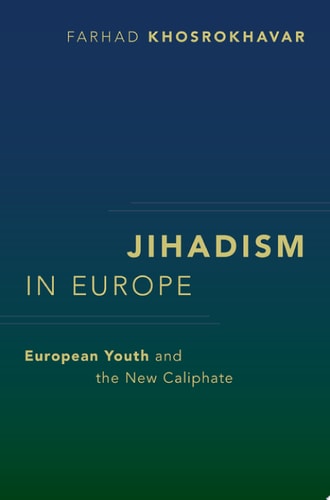
Jihadism in Europe: European Youth and the New Caliphate
0
0
As an Amazon Associate and affiliate partner, Menrva Books earns from qualifying purchases. Learn more
Author Description
European jihadism is a multi-faceted social phenomenon. It is not only linked to the extremist behavior of a limited group, but also to a much more global crisis, including the lack of a utopian vision and a loss of meaning among the middle classes, and the humiliation and denial of citizenship among disaffiliated young people in poor districts all over Western Europe. This book explores how European jihadism is fundamentally grounded in an unbridled and modern imagination, in an uneasy relationship with social, cultural, and economic reality. That imagination emerges among: young women and their longing for another family model; adolescents and their desire to become adults and to overcome the family crisis; people with mental problems for whom jihad is a catharsis; and young converts who seek contrast with a disenchanted secular Europe. The family and its crisis, in many ways, plays a role in promoting jihadism, particularly in families of immigrant origin whose relationship to patriarchy is different from that of the mainstream society in Europe. Exclusion from mainstream society is also a factor: at the urban level, a large proportion of jihadists come from poor, stigmatized, and ethnically segregated districts. But jihadism is also an expression of the loss of hope in the future in a globalized world among middle class and lower-class youth.
Menrva's Summary
THE THESIS
What are the underlying social, psychological, and structural drivers that propel European youth toward jihadist ideologies? Farhad Khosrokhavar, a prominent sociologist, utilizes extensive research and qualitative analysis to argue that jihadism in Europe is not merely a religious phenomenon but a symptom of a broader crisis of meaning and social exclusion. He examines how the intersection of family instability, economic marginalization, and a lack of utopian vision creates a vacuum that extremist narratives fill for diverse groups of young people.
THE SCOPE MAP
What You Will Find
- Analysis of the socio-economic conditions in segregated urban districts across Western Europe.
- Examination of the psychological motivations of young women, converts, and adolescents seeking identity.
- Case studies exploring the role of patriarchal family structures in immigrant communities.
- Theoretical framework linking modern imagination and the loss of hope in a globalized society to radicalization.
THE AUTHORITY PERSPECTIVE
Experts recognize this work as a significant sociological contribution to understanding the radicalization of European youth beyond simple religious explanations. Readers frequently note the density of the author's analytical approach, which provides a nuanced perspective on the intersection of identity, citizenship, and extremism.
Page Count:
421
Publication Date:
2021-01-01
Publisher:
Oxford University Press
ISBN-10:
0197564984
ISBN-13:
9780197564981
Religion
Islamic Studies
Europe
Professional Career & Trade
Sociology
Terrorism
Youth Studies
Community Tags
Other Editions(2)
Similar Books