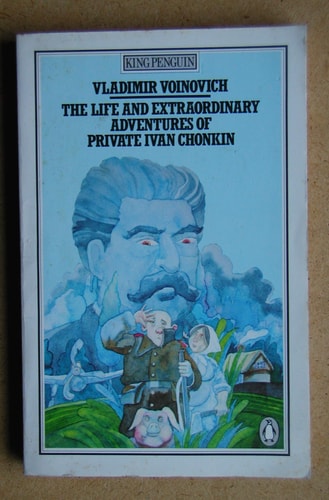
The Life and Extraordinary Adventures of Private Ivan Chonkin
0
0
As an Amazon Associate and affiliate partner, Menrva Books earns from qualifying purchases. Learn more
Author Description
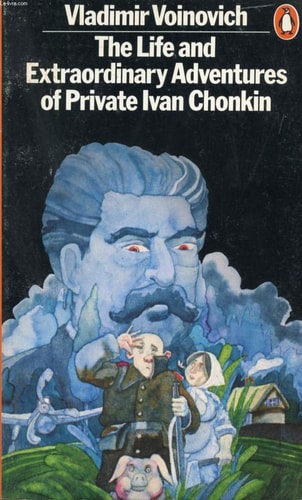
Ivan Chonkin is a simple, bumbling peasant who has been drafted into the Red Army. Shortly before the outbreak of World War II, he is sent to an obscure village with one week's ration of canned meat and orders to guard a downed plane. Apparently forgotten by his unit, Chonkin resumes his life as a peasant and passes the war tending the village postmistress's garden. Just after the German invasion, the secret police discover this mysterious soldier lurking behind the front line. Their pursuit of Chonkin and his determined resistance lead to wild skirmishes and slapstick encounters.
Menrva's Summary
THE PULSE
A simple-minded soldier finds himself caught in a bureaucratic absurdity when he is forgotten by his unit while guarding a downed plane in a remote village. Ivan Chonkin, a peasant drafted into the Red Army, attempts to navigate the rigid expectations of military life while maintaining his own uncomplicated existence. His primary objective is to fulfill his duty, yet he is constantly thwarted by the incompetence of the Soviet military apparatus and the suspicious nature of the secret police. The narrative utilizes a third-person perspective to highlight the disconnect between the soldier's mundane reality and the escalating paranoia of the state. The world is defined by the rigid, often illogical constraints of mid-20th-century Soviet bureaucracy, which Chonkin inadvertently challenges through his sheer lack of malice.
INSIDE THE PAGES
- Satirical portrayal of Soviet military bureaucracy
- Use of slapstick comedy to underscore political absurdity
- Exploration of the disconnect between state mandates and individual survival
- Character-driven narrative focusing on the archetype of the 'holy fool'
- Pacing that shifts from pastoral stillness to frantic, farcical conflict
- Critique of totalitarian paranoia and secret police overreach
- Integration of rural village life with the backdrop of global warfare
- Irony-heavy prose style that highlights the protagonist's unintentional subversion
THE COLLECTIVE ECHO
Readers frequently highlight the sharp, biting wit that Voinovich employs to dismantle the pomposity of the Soviet regime. Discussion often centers on the effectiveness of Chonkin as a protagonist, noting how his simplicity serves as a mirror for the madness of the surrounding political landscape. Critics often compare the work to other classic satires, praising the balance between slapstick humor and the underlying tension of the war era. The atmosphere is described as both absurd and grounded, providing a distinct perspective on the human cost of rigid institutional control. Many readers find the pacing to be deliberate, allowing the humor to build naturally through the protagonist's interactions with the increasingly desperate authorities.
Page Count:
272
Publication Date:
1981-01-01
Publisher:
Penguin
ISBN-10:
0140061150
ISBN-13:
9780140061154
Humor
Historical Fiction
Satire
Russian
Literary
War