August 1914
0
0
As an Amazon Associate and affiliate partner, Menrva Books earns from qualifying purchases. Learn more
Author Description
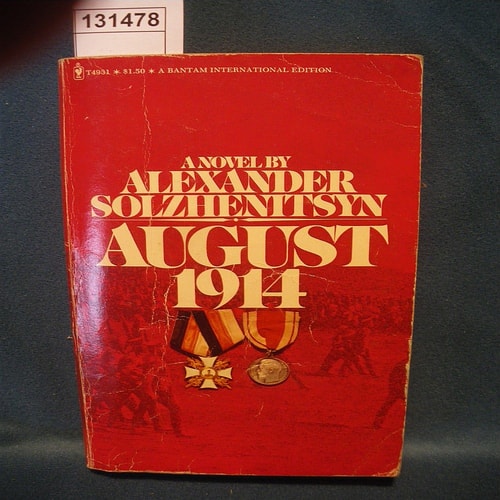
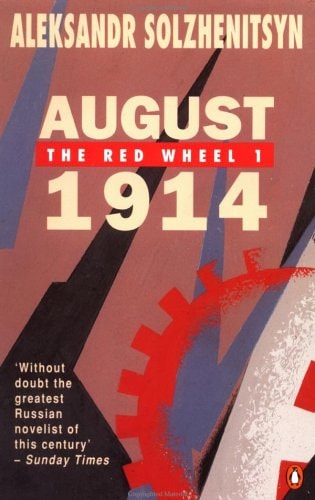
August 1914 is the first volume of The Red Wheel, Alexander Solzhenitsyn's epic cycle of novels about the Russian Revolution. It tells the story of the Russian army's disastrous defeat at the Battle of Tannenberg in August 1914, a turning point that would lead to the collapse of the Tsarist regime and the rise of the Soviet Union. Through a vast cast of characters, Solzhenitsyn explores the political, social, and military forces that shaped this pivotal moment in history.
Menrva's Summary
THE PULSE
The catastrophic defeat of the Russian Second Army at the Battle of Tannenberg serves as the catalyst for a sweeping examination of the collapse of the Tsarist regime. Solzhenitsyn follows a diverse cast of characters, ranging from high-ranking generals to common soldiers, as they navigate the logistical failures and strategic incompetence of the Russian military command. The narrative employs a multi-perspective framework, alternating between the chaotic front lines and the bureaucratic maneuvering within the Russian high command. The characters struggle against the rigid hierarchies of the Imperial army and the encroaching reality of a war that is rapidly outstripping their capacity to understand or control it. The text functions as a dense, historical reconstruction of the opening month of World War I, emphasizing the friction between individual agency and the crushing weight of historical inevitability.
INSIDE THE PAGES
- Detailed tactical analysis of the Battle of Tannenberg
- Multi-perspective narrative structure
- Incorporation of historical documents and telegrams
- Focus on the systemic failures of the Russian military bureaucracy
- Philosophical reflections on the nature of history and power
- Portrayal of the disconnect between command and the front line
- Examination of the social and political climate of pre-revolutionary Russia
- Use of stream-of-consciousness techniques to depict the confusion of combat
THE COLLECTIVE ECHO
Readers and critics frequently note the immense scale and intellectual rigor of the work, often comparing its scope to the great epics of the nineteenth century. Discussion often centers on the author's meticulous attention to military detail and his critical assessment of the leadership failures that precipitated the Russian Revolution. Many highlight the balance between the intimate experiences of the soldiers and the broader, often dry, analysis of strategic movements. The atmosphere is consistently described as somber and analytical, reflecting the gravity of the historical events depicted. Readers who appreciate deep historical immersion and complex, multi-layered narratives will find the text particularly engaging, though some may find the density of the military technicalities challenging to navigate.
Page Count:
832
Publication Date:
1992-12-01
Publisher:
Penguin Books
ISBN-10:
0140071229
ISBN-13:
9780140071221
Historical Fiction
War
Military History
Russian
Genre Fiction
Political fiction
Literary