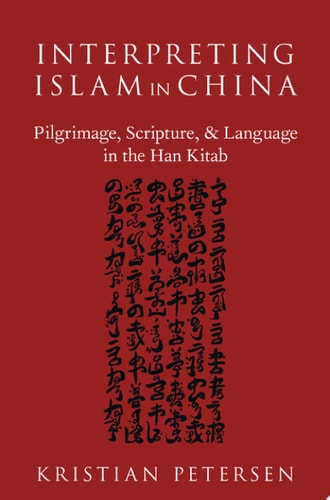
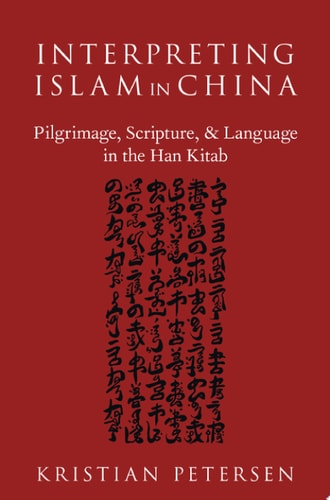
Interpreting Islam in China: Pilgrimage, Scripture, and Language in the Han Kitab
0
0
As an Amazon Associate and affiliate partner, Menrva Books earns from qualifying purchases. Learn more
Author Description
During the early modern period, Muslims in China began to embrace the Chinese characteristics of their heritage. Several scholar-teachers incorporated tenets from traditional Chinese education into their promotion of Islamic knowledge. As a result, some Sino-Muslims established an educational network which utilized an Islamic curriculum made up of Arabic, Persian, and Chinese works. The corpus of Chinese Islamic texts written in this system is collectively labeled the Han Kitab.Interpreting Islam in China explores the Sino-Islamic intellectual tradition through the works of some its brightest luminaries. Three prominent Sino-Muslim authors are used to illustrate transformations within this tradition, Wang Daiyu, Liu Zhi, and Ma Dexin. Kristian Petersen puts these scholars in dialogue and demonstrates the continuities and departures within this tradition. Through an analysis of their writings, he considers several questions: How malleable are religious categories and why are they variously interpreted across time? How do changing historical circumstances affect the interpretation of religious beliefs and practices? How do individuals navigate multiple sources of authority? How do practices inform belief? Overall, he shows that these authors presented an increasingly universalistic portrait of Islam through which Sino-Muslims were encouraged to participate within the global community of Muslims. The growing emphasis on performing the pilgrimage to Mecca, comprehensive knowledge of the Qur'an, and personal knowledge of Arabic stimulated communal engagement. Petersen demonstrates that the integration of Sino-Muslims within a growing global environment, where international travel and communication was increasingly possible, was accompanied by the rising self-awareness of a universally engaged Muslim community.
Menrva's Summary
THE THESIS
This book investigates how Sino-Muslim scholars during the early modern period adapted Islamic theology to Chinese intellectual frameworks, creating a unique tradition known as the Han Kitab. Kristian Petersen, a scholar of religious studies, utilizes a comparative analysis of primary texts from three influential figures—Wang Daiyu, Liu Zhi, and Ma Dexin—to examine how these authors navigated the intersection of local cultural identity and global Islamic practice. The work argues that these scholars constructed a universalistic portrait of Islam that allowed Chinese Muslims to reconcile their heritage with their participation in the broader global Muslim community.
THE SCOPE MAP
What You Will Find
- Analysis of the Han Kitab corpus and its educational curriculum.
- Comparative study of Wang Daiyu, Liu Zhi, and Ma Dexin.
- Examination of the role of pilgrimage, scripture, and language in shaping religious identity.
- Discussion of the influence of historical circumstances on theological interpretation.
Scope Limits
- The text focuses primarily on the intellectual history of the Han Kitab rather than a comprehensive social history of all Chinese Muslims.
- It does not provide an exhaustive survey of every minor author within the Sino-Islamic tradition.
THE AUTHORITY PERSPECTIVE
Scholars and students of Asian religious history frequently cite this work as a significant contribution to the understanding of Sino-Islamic intellectual development. The text is noted for its rigorous analysis of primary sources and its ability to bridge the gap between regional religious practices and global Islamic identity.
Page Count:
301
Publication Date:
2017-01-01
Publisher:
Oxford University Press
ISBN-10:
0190634367
ISBN-13:
9780190634360
Philosophy
History
Religion
Muslims china
China
Asian Studies
Islam
Asian History
Islam china
Community Tags
Other Editions(2)
Similar Books
Reader Comments
Share Your Thoughts
No comments yet. Be the first to share your thoughts!