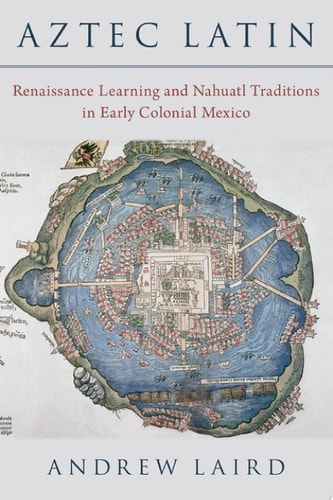
Aztec Latin: Renaissance Learning and Nahuatl Traditions in Early Colonial Mexico
0
0
As an Amazon Associate and affiliate partner, Menrva Books earns from qualifying purchases. Learn more
Author Description
This Book Calls Attention To The Importance Of Renaissance Humanism For Indigenous History In Early Colonial Mexico. It Shows How Humanism's Most Pervasive Disciplines And Practices - The Study Of Grammar, The Cultivation Of Eloquence, The Training Of Leaders, Scholarly Translation, And Antiquarian Research - Were Transformed In New Spain To Serve The Interests Of Native Elites As Well As Those Of The Spanish Authorities And Religious Orders. Recognition Of The Extent To Which The First Mexican Authors Mastered And Made Use Of European Learning Is Bound To Challenge Some Long-held Assumptions, But This Carefully Documented Study Brings Together The History Of Scholarship And Early Colonial History To Offer A Fresh Assessment Of What Those Indigenous Authors Really Achieved. A Detailed Account Of The Franciscans' Initiative To Provide Youths From The Native Nobility With An Advanced Latin Education Provides The Basis For Examination Of Various Kinds Of Writing Produced By The Friars And Their Native Students Over The Course Of The 1500s: Manuals And Vocabularies Of Mesoamerican Languages; Translations Of The Gospels, Of A Wide Range Of Devotional Literature, And Of Aesop's Fables Into The Mexican Language Of Nahuatl, As Well As Original Writing In Latin And Nahuatl. Several Testimonies About Aztec History And Belief, Ranging From The Florentine Codex To Indigenous Testimonies And Chronicles Are Also Surveyed. Aztec Latin Will Be Of Interest To Historians Of Aztec And Colonial Mexico, Renaissance Humanism, Classical Reception, Latin And Nahuatl.-- Faith, Politics And The Pursuit Of Humanity: The First Scholars In New Spain -- Persuasion For A Pagan Audience: Rhetoric, Memory And Action In Missionary Writing -- Between Babel And Utopia: Renaissance Grammar And Amerindian Languages -- Education Of The Indigenous Nobility: The Imperial College Of Santa Cruz At Santiago Tlatelolco -- From The Epistolae Et Evangelia To The Huehuetlahtolli: Indian Latinists And The Creation
Menrva's Summary
THE THESIS
This book investigates the intersection of Renaissance humanism and indigenous intellectual traditions to determine how European scholarly practices were adapted by native elites in early colonial Mexico. Andrew Laird, a scholar of classical reception and Latin literature, utilizes archival research and historical analysis to argue that the mastery of European disciplines—such as grammar, rhetoric, and translation—by indigenous authors was a sophisticated intellectual achievement that served both colonial and native interests. By examining the curriculum of the Imperial College of Santa Cruz at Tlatelolco, the author demonstrates how the synthesis of Latin and Nahuatl traditions produced a unique body of colonial literature.
THE SCOPE MAP
What You Will Find
- Analysis of the educational curriculum at the Imperial College of Santa Cruz at Tlatelolco.
- Examination of linguistic manuals, vocabularies, and translations of devotional literature into Nahuatl.
- Evaluation of indigenous contributions to the Florentine Codex and other historical chronicles.
- Discussion of the role of rhetoric and classical training in the political and religious life of New Spain.
THE AUTHORITY PERSPECTIVE
Scholars in the fields of colonial history and classical reception identify this work as a significant contribution to understanding the intellectual agency of indigenous authors in the 16th century. Readers frequently note the academic density of the prose, which provides a rigorous framework for analyzing the complex cultural exchanges between Spanish friars and the native nobility.
Page Count:
0
Publication Date:
1900-01-01
Publisher:
Oxford University Press,
ISBN-10:
0197586384
ISBN-13:
9780197586389
History
Aztecs
Humanism
Classical Reception
Latin
Learning and scholarship
Nahuatl
Humanisme
Histoire
Community Tags
Other Editions(2)
Similar Books




Reader Comments
Share Your Thoughts
No comments yet. Be the first to share your thoughts!