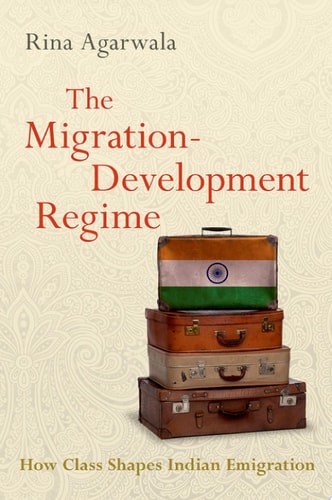
The Migration-Development Regime: How Class Shapes Indian Emigration
0
0
As an Amazon Associate and affiliate partner, Menrva Books earns from qualifying purchases. Learn more
Author Description
A sweeping history of how India has used its poor and elite emigrants to further Indian development and how Indian emigrants have reacted, resisted, and re-shaped India's development in response. How can states and migrants themselves explain the causes and effects of global migration? The Migration-Development Regime introduces a novel analytical framework to help answer this question in India, the world's largest emigrant exporter and the world's largest remittance-receiving country. Drawing on an archival analysis of Indian government documents, an original data base of Indian migrants' transnational organizations, and over 200 interviews with poor and elite Indian emigrants, recruiters, and government officials, this book exposes the vital role the Indian state (from the colonial era to the present day) has long played in forging and legitimizing class inequalities within India through the management of international emigration. It also exposes how poor and elite emigrants have differentially resisted and re-shaped state emigration practices over time. By taking a long and class-based view, this book recasts contemporary migration not simply as a problematic function of neoliberalism or as a development panacea for sending countries, but as a dynamic historical process that sending states and migrants have long used to shape local development. In doing so, it re-defines the primary problems of global migration, exposes the material and ideological impact that migration has on sending state development, and isolates what is truly novel about contemporary migration.
Menrva's Summary
THE THESIS
How does the Indian state utilize international emigration to manage class inequalities and influence national development? Rina Agarwala, a scholar of labor and development, examines the historical trajectory of Indian emigration from the colonial period to the present. By analyzing government archives and original datasets of migrant organizations, she argues that the state actively shapes migration policies to reinforce class hierarchies, while simultaneously documenting how migrants themselves resist or adapt to these state-led frameworks.
THE SCOPE MAP
What You Will Find
- Historical analysis of Indian emigration policies from the colonial era through the contemporary neoliberal period.
- A novel analytical framework for understanding the relationship between sending states and migrant populations.
- Empirical evidence derived from over 200 interviews with elite and poor emigrants, recruiters, and government officials.
- An examination of how remittances and transnational organizations influence local development and state legitimacy.
THE AUTHORITY PERSPECTIVE
Experts identify this work as a significant contribution to the study of labor migration and state-building in South Asia. Scholars frequently note the depth of the archival research and the clarity with which Agarwala connects historical state practices to current socioeconomic outcomes.
Page Count:
283
Publication Date:
2022-01-01
Publisher:
Oxford University Press
ISBN-10:
0197586422
ISBN-13:
9780197586426
History
Economics
Asian History
Developing Countries
Sociology
Comparative Politics
Migration Studies
Community Tags
Similar Books