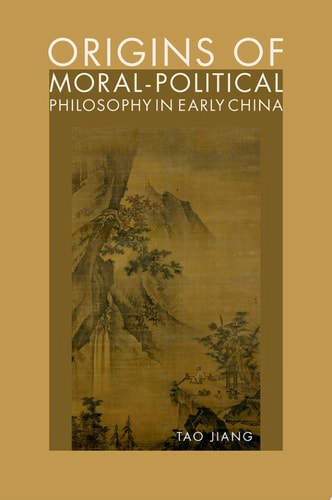
Origins of Moral-Political Philosophy in Early China: Contestation of Humaneness, Justice, and Personal Freedom
0
0
As an Amazon Associate and affiliate partner, Menrva Books earns from qualifying purchases. Learn more
Author Description
Cover -- Origins Of Moral-political Philosophy In Early China -- Copyright -- Dedication -- Contents -- Acknowledgments -- Introduction -- 1. Chinese Philosophy In The Western Academy: Between Sinology And Philosophy -- 2. Sinological Challenge Concerning Classical Chinese Philosophy -- 2.1. The Problem Of Authorship In Philosophical Interpretations -- 2.2. A Case Study Of Authorship: Contemporary Debate On The Zhuangzi -- 2.3. Multiple Roles Of Authorship -- 2.4. Sinology And Philosophy On Authorship And Textual Coherence 2.5. Two Sets Of Scholarly Objects: Sinological Versus Philosophical -- 2.6. Three Roles Of Sinology In Chinese Philosophy: Preparer, Challenger, And Jailbreaker -- 3. The Politics Of Chinese Philosophy In The West: Some Recent Developments -- 3.1. An Uproar In America -- 3.2. A Controversy In Europe -- 4. Origins Of Moral-political Philosophy In Early China -- 4.1 Contestation Of Humaneness, Justice, And Personal Freedom -- 4.2. Summary Of Chapters -- Part 1 -- 1. Ritual And Ren In Confucius's World: Humaneness-cum-justice At The Incipience Of Chinese Moral-political Philosophy 1. Situating Confucius And The Analects -- 2. Confucius And The Mandate Of Heaven -- 2.1. The Mandate Of Heaven And The Justice Turn In Chinese History -- 2.2. Confucius's Subversive Claim Concerning The Heavenly Mandate -- 3. Ritualizing The World -- 3.1. Vicissitudes Of Ritual In Early Zhou -- 3.2. Emergence Of Ritual As A Distinct Conceptual Category -- 4. Confucius's Ethicization Of Ritual: Shifting The Ground Of Ritual From Heaven To Ren -- 4.1. Ren: A New And Contested Ground Of Ritual -- 4.2. Ren As Humaneness: Ideal Person, Family, And Polity -- 4.3. Ren As Justice A. Semantic Argument -- B. Philosophical Argument: Ren And The Golden Rule In The Analects -- 4.4. Continuum Between Humaneness And Justice In Confucius's Ren -- 5. After Confucius: Early Confucianism In The Excavated Bamboo-slip Manuscripts -- 5.1. Scholarly Disputations About The Excavated Texts -- 5.2
Menrva's Summary
THE THESIS
This work investigates the foundational origins of moral and political philosophy in early China by examining the conceptual evolution of humaneness, justice, and personal freedom. Tao Jiang, a scholar of Chinese philosophy, utilizes a rigorous methodological framework that bridges the gap between traditional Sinology and contemporary philosophical analysis. He argues that early Chinese thinkers, particularly Confucius, initiated a profound shift in political discourse by reinterpreting ritual and moral authority, thereby establishing a distinct intellectual tradition that continues to influence modern political thought.
THE SCOPE MAP
What You Will Find
- A critical analysis of the intersection between Sinological research and Western philosophical inquiry.
- A detailed examination of the concept of 'Ren' (humaneness) and its role in the development of early Confucian ethics.
- Case studies on the authorship and textual coherence of classical works like the Zhuangzi and the Analects.
- An exploration of the 'Mandate of Heaven' as a catalyst for the emergence of justice-oriented political philosophy in early Zhou society.
THE AUTHORITY PERSPECTIVE
Scholars in the field of comparative philosophy recognize this text as a significant contribution to the ongoing debate regarding the methodology of interpreting non-Western philosophical traditions. Readers frequently note the academic density of the prose, which serves as a foundational resource for those interested in the intersection of historical philology and normative political theory.
Page Count:
530
Publication Date:
2021-01-01
Publisher:
Oxford University Press
ISBN-10:
0197603491
ISBN-13:
9780197603499
History
Philosophy
Religion
Buddhist
Chinese Philosophy
Ethics history
Ethics
Buddhism
Political Philosophy
Community Tags
Similar Books










Reader Comments
Share Your Thoughts
No comments yet. Be the first to share your thoughts!