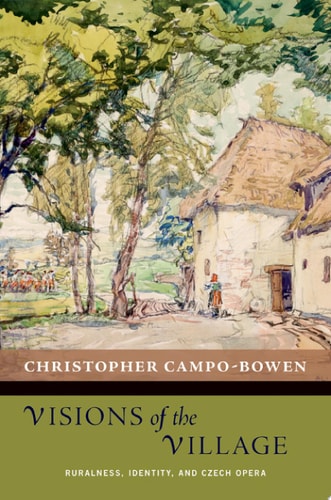
Visions of the Village: Ruralness, Identity, and Czech Opera
0
0
As an Amazon Associate and affiliate partner, Menrva Books earns from qualifying purchases. Learn more
Author Description
Visions Of The Village: Ruralness, Identity, And Czech Opera Provides A Nuanced Investigation Into The Cultural History, Political Salience, And Social Resonances Of Czech Village Operas, Especially Those By Composers Bedřich Smetana, Antonín Dvořák, And Leoš Janáček. By Examining Music-critical Writings, Institutional And Government Records, Letters, And Other Archival Sources, This Book Shows How Musical Representations Of The Idealized Village Acquired And Provided Meaning For Czech Audiences, Serving As The Basis For Understandings Of A Wide Range Of Sociocultural And Political Issues, Including Gender, Class, Nationalism, Imperialism, Ethnicity, And Race. Operas Like Smetana's The Bartered Bride, Dvořák's The Devil And Kate, And Janáček's Jenůfa Served As Focal Points For The Articulation Of An Essentialist Sense Of Czech Identity, One Deeply Intertwined With The Strictures And Discourses Of Empire. Even After The Dissolution Of The Austro-hungarian Empire, Essentialist Understandings Of Society Continued To Be Expressed Through Reference To Village Operas And Idealized Rural Life, A Practice That Persists, If In Attenuated Form, To This Day. In Addition To Composers And Their Operas, Visions Of The Village Investigates The Output Of Critics, Administrators, And Other Urban Intellectuals Like Otakar Hostinský, František Adolf Šubert, And Zdeněk Nejedlý To Understand The Impact Of Village Operas On Public Discourse. Thus, This Book Provides Insight Into How Music Functions At The Nexus Of The Desire For Politically Resonant Ethnoracial Identities And The Representation Of Ruralness, From The Nineteenth Century To The Present-- Provided By Publisher.
Menrva's Summary
THE THESIS
This book investigates how the representation of the idealized village in Czech opera functioned as a primary vehicle for constructing national identity and navigating complex sociocultural tensions from the nineteenth century to the present. Christopher Campo-Bowen, a scholar of musicology, utilizes an extensive array of archival materials, including government records, personal correspondence, and contemporary music criticism. By analyzing the works of composers such as Smetana, Dvořák, and Janáček alongside the writings of urban intellectuals, the author argues that these operatic depictions of rural life were not merely aesthetic choices but were deeply embedded in the political discourse of empire, ethnicity, and class. The study demonstrates how these musical narratives provided a framework for Czech audiences to articulate their identity within and beyond the Austro-Hungarian Empire.
THE SCOPE MAP
What You Will Find
- Historical analysis of Czech opera production from the nineteenth century through the modern era.
- Examination of the intersection between rural imagery and political ideologies like nationalism and imperialism.
- Primary source research involving institutional records, letters, and critical essays from figures like Otakar Hostinský.
- Theoretical framework connecting musical performance to concepts of gender, race, and social class.
THE AUTHORITY PERSPECTIVE
Scholars in the field of musicology and Central European history identify this work as a significant contribution to the study of how art forms influence public discourse and national identity. Readers frequently note the academic rigor and the depth of the archival research presented throughout the text.
Page Count:
272
Publication Date:
2025-04-01
Publisher:
Oxford University Press
ISBN-10:
0197602037
ISBN-13:
9780197602034
Nationalism
Opera
Music History
Sociology
Cultural History
Musical Genres
Community Tags
Similar Books