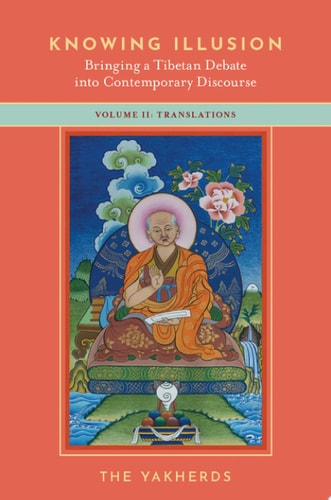
Knowing Illusion: Bringing a Tibetan Debate into Contemporary Discourse: Volume II: Translations
0
0
As an Amazon Associate and affiliate partner, Menrva Books earns from qualifying purchases. Learn more
Author Description
Tsongkhapa (1357-1419) is by any measure the single most influential philosopher in Tibetan history. His articulation of Prasangika Madhyamaka, and his interpretation of the 7th Century Indian philosopher Candrakirti's interpretation of Madhyamaka is the foundation for the understanding of that philosophical system in the Geluk school in Tibet. Tsongkhapa argues that Candrakirti shows that we can integrate the Madhyamaka doctrine of the two truths, and of the ultimate emptiness of all phenomena with a robust epistemology that explains how we can know both conventional and ultimate truth and distinguish truth from falsity within the conventional world. The Sakya scholar Taktsang Lotsawa (born 1405) published the first systematic critique of Tsongkhapa's system. In the fifth chapter of his Freedom from Extremes Accomplished through Comprehensive Knowledge of Philosophy, Taktsang attacks Tsongkhapa's understanding of Candrakirti and the cogency of integrating Prasangika Madhyamaka with any epistemology. This attack launches a debate between Geluk scholars on the one hand and Sakya and Kagyu scholars on the other regarding the proper understanding of this philosophical school and the place of epistemology in the Madhyamaka program. This debate raged with great ferocity from the 15th through the 18th centuries, and continues still today. These two volumes study that debate and present translations of the most important texts produced in that context. Volume I provides historical and philosophical background for this dispute and elucidates the philosophical issues at stake in the debate, exploring the principal arguments advanced by the principals on both sides, and setting them in historical context. This volume presents English translations of each of the most important texts in this debate.
Menrva's Summary
THE THESIS
This volume investigates the historical and philosophical debate between Geluk, Sakya, and Kagyu scholars regarding the integration of Prasangika Madhyamaka doctrine with epistemology. The Yakherds, a collective of scholars, present a rigorous examination of the critique launched by Taktsang Lotsawa against Tsongkhapa’s interpretation of Candrakirti. By analyzing the tension between the two truths and the role of epistemology in the Madhyamaka program, the authors provide a framework for understanding the evolution of this discourse from the 15th through the 18th centuries.
THE SCOPE MAP
What You Will Find
- English translations of primary source texts central to the Geluk-Sakya-Kagyu debate.
- A systematic analysis of Taktsang Lotsawa’s critique of Tsongkhapa’s philosophical system.
- Historical context regarding the development of Prasangika Madhyamaka in Tibet.
- Examination of the integration of the two truths doctrine with conventional epistemology.
THE AUTHORITY PERSPECTIVE
Scholars and students of Tibetan philosophy identify this work as a critical resource for accessing primary source material on the Madhyamaka debate. Readers frequently note the academic density of the prose, which is intended for those with a foundational understanding of Buddhist philosophical terminology.
Page Count:
498
Publication Date:
2021-01-01
Publisher:
Oxford University Press
ISBN-10:
019760370X
ISBN-13:
9780197603703
Philosophy
Religion
History
Buddhism
Eastern
Community Tags
Similar Books