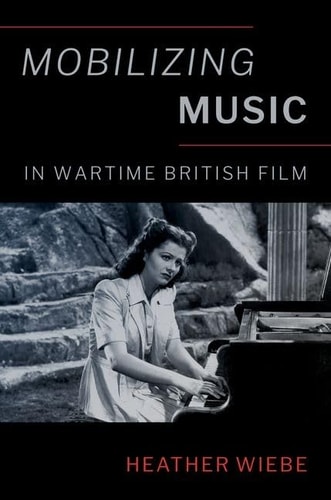
Mobilizing Music in Wartime British Film
0
0
As an Amazon Associate and affiliate partner, Menrva Books earns from qualifying purchases. Learn more
Author Description
The 1941 Film Dangerous Moonlight Opens With A Kind Of Musical Cure. The Great Polish Pianist Stefan Radetzky, Injured While Flying In Combat, Is In A London Hospital. Amid The Sounds Of Bombing-the Film Was Both Made And Set During The Blitz-he Mechanically Bangs Out Clusters On His Piano, All Memory And Identity Gone. His Doctor Observes, If We Could Get Him Better, I Should Feel That We'd Done Something For The World, Something For... Well You Know What I Mean. Before Joining The Royal Air Force's New Polish Squadrons, Radetzky Had Toured Incessantly, Performing His Rachmaninoff-style Warsaw Concerto To Raise Funds For The War Effort. Now He Is Rendered Useless, Another Casualty. But Music Will Come To The Rescue, Reanimating Him And Restoring Him To The World. When He Suddenly Begins To Play His Concerto Once More, His Memory Flooding Back, His Doctor Comments Hopefully, Perhaps That Music Will Bring Back A Lot Of Things. Radetzky Is One Of Many Pianists Who Show Up In Wartime British Films, Beleaguered But Playing On. In These Films' Frequent Recourse To Art Music And Musicians, They Call On Some Familiar Tropes, Casting Music As Spiritual Sustenance And Consolation In Wartime Or As Building Morale And Solidarity. As This Episode Suggests, Though, These Films Also Probe A More Elaborate Set Of Concerns With Music's Efficacy, With Its Power To Do Things In The World. In Dangerous Moonlight, Music Is Something That Can Be Mobilized For War. At The Same Time, It Stands For What Survives War And Stands Apart From It. The Tension Between These Two Positions Is Key To This Book.-- Provided By Publisher.
Menrva's Summary
THE THESIS
This book investigates how British cinema during the Second World War utilized music not merely as background accompaniment, but as a functional tool for psychological restoration, national morale, and ideological mobilization. Author Heather Wiebe examines the intersection of art music and wartime trauma, arguing that films of the era positioned the musician as a symbolic figure capable of bridging the gap between individual suffering and collective resilience. By analyzing specific cinematic tropes, the text explores the tension between music as a transcendent cultural artifact and music as a pragmatic instrument of the war effort.
THE SCOPE MAP
What You Will Find
- Analysis of the recurring archetype of the beleaguered pianist in wartime British film.
- Examination of the 1941 film Dangerous Moonlight and its use of the Warsaw Concerto.
- Exploration of music as a mechanism for memory recovery and identity restoration.
- Discussion of the dual role of music as both a source of spiritual consolation and a mobilized asset for state morale.
THE AUTHORITY PERSPECTIVE
Scholars in film musicology identify this work as a significant contribution to the understanding of mid-century British cultural production. The text is noted for its ability to synthesize historical context with detailed formal analysis of cinematic soundscapes.
Page Count:
0
Publication Date:
2025-01-01
Publisher:
New York : Oxford University Press,
ISBN-10:
0197631738
ISBN-13:
9780197631737
History
Motion pictures
Music And War
Criticism history
British History
Film Studies
Political Aspects
Music History
Community Tags
Other Editions(3)

Similar Books


Reader Comments
Share Your Thoughts
No comments yet. Be the first to share your thoughts!