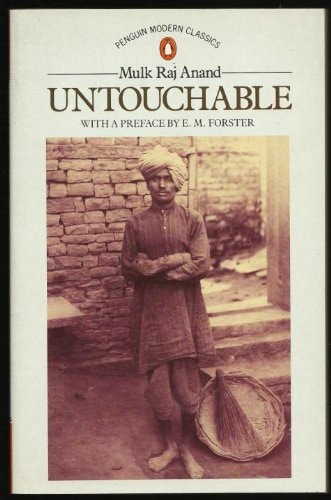
Untouchable
0
0
As an Amazon Associate and affiliate partner, Menrva Books earns from qualifying purchases. Learn more
Author Description
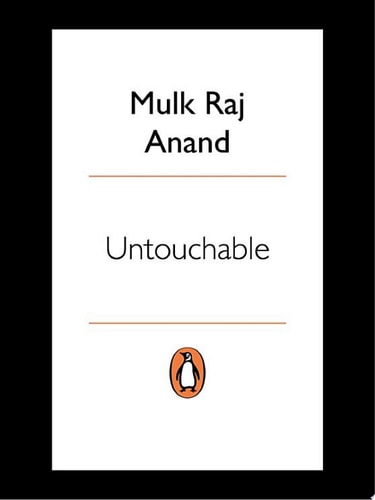
The powerful story of an Untouchable in India’s caste system, now with a new introductionWith precision, vitality, and a fury that earned him praise as India’s Charles Dickens, Mulk Raj Anand recreates in Untouchable what it was like to live on the fringes of society in pre-independence India. Bakha, an attractive, proud, and strong young man, is also an Untouchable, the lowest of the low in India’s caste system. A sweeper and a toilet-cleaner, he must warn others on the street of his status so that he will not pollute them with his presence. In this urgent 1935 re-creation of one day in the life of an outcast, a violent encounter leads Bakha to question his fate—and to find an answer in the unlikeliest of places.For more than sixty-five years, Penguin has been the leading publisher of classic literature in the English-speaking world. With more than 1,500 titles, Penguin Classics represents a global bookshelf of the best works throughout history and across genres and disciplines. Readers trust the series to provide authoritative texts enhanced by introductions and notes by distinguished scholars and contemporary authors, as well as up-to-date translations by award-winning translators.
Menrva's Summary
THE PULSE
A single day in the life of a young sweeper named Bakha exposes the rigid, dehumanizing constraints of the Indian caste system. Bakha, a physically strong and proud young man, navigates the daily indignities of his status as an Untouchable in pre-independence India. His objective is to perform his menial labor while avoiding the wrath of those who view his very presence as a source of pollution. The narrative follows a linear progression through one day, capturing the tension between his internal desire for dignity and the external forces of social hierarchy that seek to suppress him. The story utilizes a third-person limited perspective to ground the reader in Bakha's immediate sensory experiences and his growing awareness of his marginalized position.
INSIDE THE PAGES
- Focus on the socio-economic realities of the caste system
- Use of stream of consciousness to depict internal conflict
- Detailed descriptions of daily labor and social interactions
- Exploration of the tension between tradition and modernity
- Examination of the psychological impact of systemic oppression
- Portrayal of the physical environment of a colonial-era Indian town
- Integration of political and religious themes regarding social hierarchy
- Emphasis on the protagonist's search for personal identity
THE COLLECTIVE ECHO
Discussion often centers on Anand's ability to humanize a character who is systematically stripped of his agency by society. Readers frequently highlight the stark, unvarnished depiction of poverty and social exclusion as a defining element of the prose. Critics often compare the author's observational style to that of Charles Dickens, noting the balance between individual character development and broader social commentary. The narrative is widely recognized for its effectiveness in creating an atmosphere of urgency and moral inquiry. Many readers find the conclusion to be a significant point of debate regarding the potential for social change within the established framework of the time.
Page Count:
160
Publication Date:
1985-12-03
Publisher:
Penguin Classic
ISBN-10:
0140079203
ISBN-13:
9780140079203
Historical Fiction
Indian
Political fiction
Social Realism
Classic Literature
World Literature
Canadian