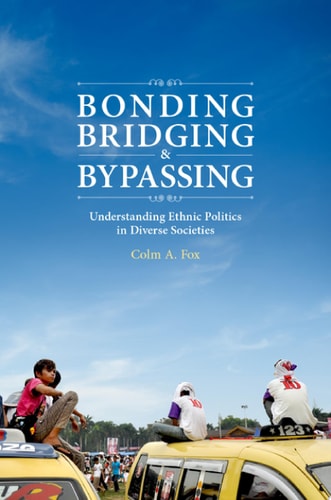
Bonding, Bridging, & Bypassing: Understanding Ethnic Politics in Diverse Societies
0
0
As an Amazon Associate and affiliate partner, Menrva Books earns from qualifying purchases. Learn more
Author Description
Societal divisions and even violence can occur when electoral candidates appeal to race, religion, or tribe. Why do candidates make these ethnic appeals? More specifically, why do some candidates appeal to their own ethnic group while others reach out to other ethnic groups or abandon ethnic appeals altogether? To answer this question, Colm A. Fox adopted a novel approach to study campaign appeals made by thousands of candidates. He collected and systematically analyzed photographs of over 25,000 election posters from campaigns across Indonesia, along with newspaper reports and interview data. The book shows how electoral rules, political party ideology, ethnic demographics, and social norms shape candidates’ decisions to bond with co-ethnics, bridge across other ethnic groups, or bypass ethnicity entirely. Its findings yield not only insights as to which ethnic identities are likely to become politicized, but also prescriptions on how to curb divisive ethnic politics.
Menrva's Summary
THE THESIS
This book investigates the strategic motivations behind why political candidates choose to utilize ethnic appeals in diverse societies. Colm A. Fox, a scholar of comparative politics, utilizes a massive dataset of election materials to examine the intersection of electoral incentives and identity politics. By analyzing the behavior of thousands of candidates, the author constructs a framework that explains how institutional rules and social environments dictate whether a politician will bond with their own group, bridge to others, or bypass ethnic identity altogether.
THE SCOPE MAP
What You Will Find
- A systematic analysis of over 25,000 election posters from Indonesian campaigns.
- A comparative framework evaluating the impact of electoral rules and party ideology on campaign rhetoric.
- Integration of qualitative data including newspaper reports and primary source interviews.
- Prescriptive strategies for mitigating the influence of divisive ethnic politics in democratic systems.
THE AUTHORITY PERSPECTIVE
Experts recognize this work as a significant empirical contribution to the study of ethnic politics and electoral behavior. The text is noted for its rigorous methodology and its ability to translate complex political science theories into actionable insights for policy reform.
Page Count:
342
Publication Date:
2024-03-01
Publisher:
Oxford University Press
ISBN-10:
0197743951
ISBN-13:
9780197743959
Politics
Elections
Ethnic Studies
Elections & Political Process
Comparative Politics
World politics
Indonesia
Sociology