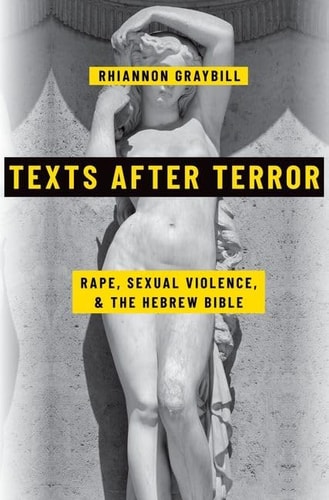
Texts after Terror: Rape, Sexual Violence, and the Hebrew Bible
0
0
As an Amazon Associate and affiliate partner, Menrva Books earns from qualifying purchases. Learn more
Author Description
Texts after Terror offers an important new theory of rape and sexual violence in the Hebrew Bible. While the Bible is filled with stories of rape, scholarly approaches to sexual violence in the scriptures remain exhausted, dated, and in some cases even un-feminist, lagging far behind contemporary discourse about sexual violence and rape culture. Graybill responds to this disconnect by engaging contemporary conversations about rape culture, sexual violence, and #MeToo, arguing that rape and sexual violence - both in the Bible and in contemporary culture - are frequently fuzzy, messy, and icky, and that we need to take these features seriously. Texts after Terror offers a new framework informed by contemporary conversations about sexual violence, writings by victims and survivors, and feminist, queer, and affect theory. In addition, Graybill offers significant new readings of biblical rape stories, including Dinah (Gen. 34), Tamar (2 Sam. 13), Bathsheba (2 Sam. 11), Hagar (Gen. 16), Daughter Zion (Lam. 1-2), and the unnamed woman known as the Levite's concubine (Judges 19). Texts after Terror urges feminist biblical scholars and readers of all sorts to take seriously sexual violence and rape, while also holding space for new ways of reading these texts that go beyond terror, considering what might come after.
Menrva's Summary
THE THESIS
How can contemporary frameworks of rape culture and affect theory reshape the scholarly interpretation of sexual violence within the Hebrew Bible? Rhiannon Graybill, a scholar in biblical studies, critiques the limitations of traditional academic approaches that often overlook the complexities of trauma and systemic violence in scripture. By integrating insights from #MeToo discourse, survivor narratives, and queer theory, she proposes a methodology that acknowledges the ambiguity and discomfort inherent in these biblical accounts rather than sanitizing them for traditional theological analysis.
THE SCOPE MAP
What You Will Find
- Analysis of specific biblical narratives including Dinah, Tamar, Bathsheba, Hagar, Daughter Zion, and the Levite's concubine.
- Application of feminist, queer, and affect theory to ancient religious texts.
- A critique of historical-critical methods that fail to engage with contemporary rape culture.
- A framework for reading biblical violence that prioritizes the experiences of victims and survivors.
THE AUTHORITY PERSPECTIVE
Scholars in the field of biblical studies recognize this work as a significant intervention in how sexual violence is addressed within religious texts. Experts frequently highlight the author's ability to bridge the gap between ancient exegesis and modern sociological discourse regarding trauma and systemic abuse.
Page Count:
248
Publication Date:
2023-01-01
Publisher:
Oxford University Press
ISBN-10:
0197764118
ISBN-13:
9780197764114
Politics
Philosophy
Religion
History
New Used & Rental Textbooks
Sociology
Womens Studies
Feminist Theory
Abuse
Gender Studies
Bible
Bible Study
Bibles
Special Topics
Community Tags
Similar Books