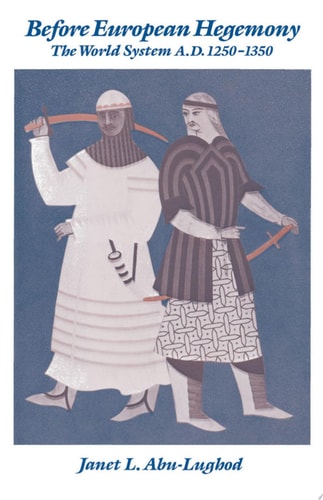
Before European Hegemony
0
0
As an Amazon Associate and affiliate partner, Menrva Books earns from qualifying purchases. Learn more
Author Description
In This Important Study, Abu-lughod Presents A Groundbreaking Reinterpretation Of Global Economic Evolution, Arguing That The Modern World Economy Had Its Roots Not In The Sixteenth Century, As Is Widely Supposed, But In The Thirteenth Century Economy--a System Far Different From The European World System Which Emerged From It. Using The City As The Working Unit Of Analysis, Before European Hegemony Provides A New Paradigm For Understanding The Evolution Of World Systems By Tracing The Rise Of A System That, At Its Peak In The Opening Decades Of The 14th Century, Involved A Vast Region Stretching Between Northwest Europe And China. Writing In A Clear And Lively Style, Abu-lughod Explores The Reasons For The Eventual Decay Of This System And The Rise Of European Hegemony.
Menrva's Summary
THE THESIS
This work investigates whether the modern world economy originated in the thirteenth century rather than the sixteenth century. Janet L. Abu-Lughod, a prominent sociologist and historian, utilizes a comparative urban analysis to challenge Eurocentric narratives of economic development. She argues that a sophisticated, interconnected global system existed long before European dominance, linking regions from Northwest Europe to China through trade and cultural exchange.
THE SCOPE MAP
What You Will Find
- A detailed analysis of the thirteenth-century global trade network spanning from Europe to East Asia.
- A methodological framework using individual cities as the primary unit of economic analysis.
- Historical evidence examining the rise and subsequent decline of the Mongol-era trade system.
- Comparative studies of regional economic structures in the Middle East, India, and China.
THE AUTHORITY PERSPECTIVE
Scholars frequently cite this text as a foundational contribution to world-systems theory and global history. Experts note that the book remains a standard reference for understanding pre-modern economic interconnectedness and the transition toward European hegemony.
Page Count:
0
Publication Date:
1991-01-01
Publisher:
Oxford University Press
ISBN-10:
0198022549
ISBN-13:
9780198022541
History
Economics
World history
Globalization
Sociology
Community Tags
Similar Books