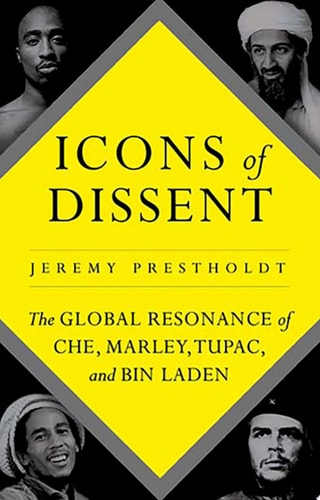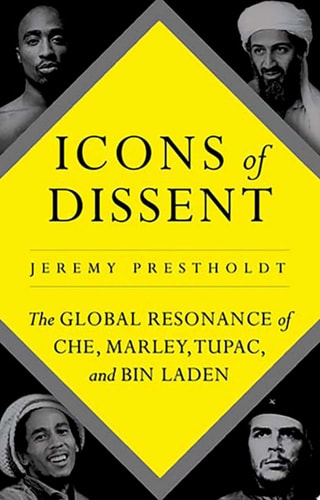
Icons of Dissent
0
0
As an Amazon Associate and affiliate partner, Menrva Books earns from qualifying purchases. Learn more
Author Description
The Global Icon Is An Omnipresent But Poorly Understood Element Of Mass Culture. This Book Asks Why Audiences Around The World Have Embraced Particular Iconic Figures, How Perceptions Of These Figures Have Changed, And What This Tells Us About Transnational Relations Since The Cold War Era. Prestholdt Addresses These Questions By Examining One Type Of Icon: The Anti-establishment Figure. As Symbols That Represent Sentiments, Ideals, Or Something Else Recognizable To A Wide Audience, Icons Of Dissent Have Been Integrated Into Diverse Political And Consumer Cultures, And Global Audiences Have Reinterpreted Them Over Time. To Illustrate These Points The Book Examines Four Of The Most Evocative And Controversial Figures Of The Past Fifty Years: Che Guevara, Bob Marley, Tupac Shakur, And Osama Bin Laden. Each Has Embodied A Convergence Of Dissent, Cultural Politics, And Consumerism, Yet Popular Perceptions Of Each Reveal The Dissonance Between Shared, Global References And Locally Contingent Interpretations. By Examining Four Very Different Figures, Icons Of Dissent Offers New Insights Into Global Symbolic Idioms, The Mutability Of Common References, And The Commodification Of Political Sentiment In The Contemporary World.
Menrva's Summary
THE THESIS
This book investigates why specific anti-establishment figures achieve global iconic status and how their meanings are reinterpreted across diverse cultural and political landscapes. Jeremy Prestholdt, a historian specializing in global history and cultural politics, utilizes a comparative framework to analyze the intersection of dissent, consumerism, and transnational identity. By examining the evolution of public perception surrounding four controversial figures, the author argues that global icons function as mutable symbols that reflect local political sentiments rather than fixed, universal truths.
THE SCOPE MAP
What You Will Find
- Comparative analysis of Che Guevara, Bob Marley, Tupac Shakur, and Osama bin Laden
- Examination of the commodification of political dissent in mass culture
- Analysis of the dissonance between global symbolic references and local interpretations
Scope Limits
- Does not provide exhaustive biographies of the subjects
- Does not cover icons outside the specific lens of anti-establishment political dissent
THE AUTHORITY PERSPECTIVE
Scholars and critics frequently note the book's sophisticated approach to cultural history and its ability to bridge the gap between media studies and political science. Experts highlight this as a valuable resource for understanding how symbols are constructed and consumed in a globalized, post-Cold War world.
Page Count:
0
Publication Date:
2019-01-01
Publisher:
Oxford University Press
ISBN-10:
0190092599
ISBN-13:
9780190092597
History
Media Studies
Globalization
Sociology
Community Tags
Similar Books