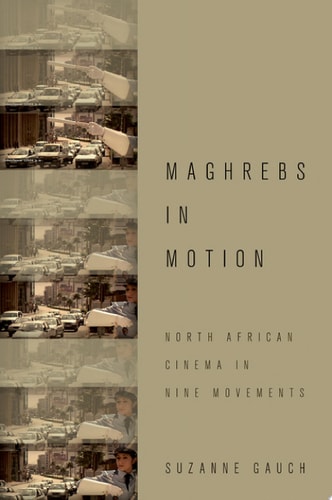
Maghrebs in Motion: North African Cinema in Nine Movements
0
0
As an Amazon Associate and affiliate partner, Menrva Books earns from qualifying purchases. Learn more
Author Description
Exploring films made in Tunisia, Morocco, and Algeria from 1985 to 2009, Suzanne Gauch illustrates how late post-independence and early twenty-first century North African cinema prefigured many of the transformations in perception and relation that stunned both participants and onlookers during the remarkable uprisings of the 2011 Arab Spring. Through multifaceted examinations of key films by nine filmmakers--Farida Benlyazid, Mohamed Chouikh, Nacer Khemir, Nabil Ayouch, Lyès Salem, Nadia El Fani, Tariq Teguia, Faouzi Bensaïdi, and Nejib Belkadhi--Gauch delineates the shifting relation of politics to film in the era of neoliberal globalization. Each work, she argues, taps the power inherent in cinema to destabilize patterns of perception and judgment while taking film's role as popular entertainment in new directions. Highlighting how each film taps into the mobility at the core of cinema to break through the boundaries that have long circumscribed filmmaking from North Africa, Gauch shows how this cinema continues to forge and reflect unexpected trajectories for itself and its audiences.
Menrva's Summary
THE THESIS
This work investigates how North African cinema between 1985 and 2009 anticipated the social and political shifts that culminated in the 2011 Arab Spring. Suzanne Gauch, a scholar of film and cultural studies, utilizes a framework of cinematic mobility to analyze how filmmakers from Tunisia, Morocco, and Algeria navigated the pressures of neoliberal globalization. By examining the aesthetic and thematic choices of nine distinct directors, she argues that these films actively destabilized traditional perceptions of politics and identity in the region.
THE SCOPE MAP
What You Will Find
- Analysis of films from Tunisia, Morocco, and Algeria produced between 1985 and 2009.
- Detailed case studies of nine filmmakers including Farida Benlyazid, Nacer Khemir, and Nabil Ayouch.
- A theoretical framework connecting cinematic movement to political transformation.
Scope Limits
- The study does not provide a comprehensive history of North African film production prior to 1985.
- The analysis focuses primarily on the selected nine directors rather than an exhaustive survey of all regional cinema.
THE AUTHORITY PERSPECTIVE
Scholars in the field of Middle Eastern film studies recognize this text as a significant contribution to understanding the intersection of regional aesthetics and political upheaval. Readers frequently note the academic density of the prose, which is intended for those with a background in film theory and post-colonial studies.
Page Count:
250
Publication Date:
2016-01-01
Publisher:
Oxford University Press
ISBN-10:
0190493577
ISBN-13:
9780190493578
History
Middle Eastern
Film Studies
Globalization
African history
North African Cinema
Motion pictures
Community Tags
Similar Books