
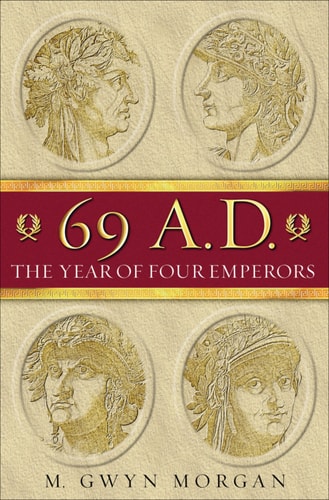
69 A.D.: The Year of Four Emperors
0
0
As an Amazon Associate and affiliate partner, Menrva Books earns from qualifying purchases. Learn more
Author Description
The Year Of Four Emperors, So The Ancient Sources Assure Us, Was One Of The Most Chaotic, Violent And Frightening Periods In All Roman History: A Time Of Assassinations And Civil Wars, Of Armies So Out Of Control That They Had No Qualms About Occupying The City Of Rome, And Of Ambitious Men Who Seized Power Only To Lose It, One After Another. In 69 Ad, Gwyn Morgan Offers A Fresh Look At This Period, Based On Two Considerations To Which Insufficient Attention Has Been Paid In The Past. First, That We Need To Unravel Rather Than Cherry-pick Between The Conflicting Accounts Of Tacitus, Plutarch And Suetonius, Our Three Main Sources Of Information. And Second, That The Role Of The Armies, As Distinct From That Of Their Commanders, Has Too Often Been Exaggerated. The Result Is A Remarkably Accurate And Insightful Narrative History, Filled With Colorful Portraits Of The Leading Participants And New Insights Into The Nature Of The Roman Military Morgan Ranges From The Suicide Of Nero In June 68 To The Triumph Of Vespasian In December 69. In Between, Three Other Emperors Hold Power. We Meet Galba, Old, Tightfisted And Conservative, Who Was Declared Emperor In June 68 And Assassinated In January 69. Otho, Once Nero's Boon Companion, Who Was Responsible For Murdering Galba, Seized Power In A Coup In Rome In January 69 And, To Everybody's Surprise, Committed Suicide Three Months Later In A Vain Attempt To End The Civil Wars. Vitellius, As Indolent As He Was Extravagant, Who Was Put Forward By Two Ambitious Lieutenants, Recognized By The Senate In Rome Once They Heard Of Otho's Death In April, And Cut Down By Vespasian's Partisans In The Last Days Of December. And Then There Is Vespasian, The Candidate Who Looked Least Likely To Succeed, But (according To Tacitus) Was Still The First To Be Improved By Becoming Emperor. A Strikingly Vivid Account Of Ancient Rome, 69 Ad Is An Original And Compelling Account Of One Of The Best Known But Perhaps Least Understood Periods In All Roma
Menrva's Summary
THE THESIS
This work investigates the chaotic transition of power during the Roman Year of Four Emperors, questioning the traditional reliance on conflicting ancient sources and the perceived influence of the military. Gwyn Morgan, a scholar of Roman history, re-evaluates the period between the suicide of Nero and the rise of Vespasian. By systematically analyzing the accounts of Tacitus, Plutarch, and Suetonius, the author challenges the historical consensus regarding the autonomy of Roman legions versus their commanders. The text provides a structured framework for understanding how political instability and military dynamics shaped the imperial succession.
THE SCOPE MAP
What You Will Find
- A detailed chronological analysis of the Roman political landscape from June 68 AD to December 69 AD.
- A critical examination of primary source material from Tacitus, Plutarch, and Suetonius.
- Biographical profiles of Galba, Otho, Vitellius, and Vespasian.
- An assessment of the Roman military's operational role in civil conflict and political coups.
THE AUTHORITY PERSPECTIVE
Experts recognize this text as a rigorous re-examination of a pivotal moment in Roman history that moves beyond traditional narratives. Readers frequently note the author's ability to synthesize complex primary source conflicts into a coherent and accessible historical account.
Page Count:
336
Publication Date:
2005-01-01
Publisher:
Oxford University Press, Incorporated
ISBN-10:
0198028873
ISBN-13:
9780198028871
History
Biography
Military History
Roman History
Ancient History
Community Tags
Other Editions(2)
Similar Books


Reader Comments
Share Your Thoughts
No comments yet. Be the first to share your thoughts!