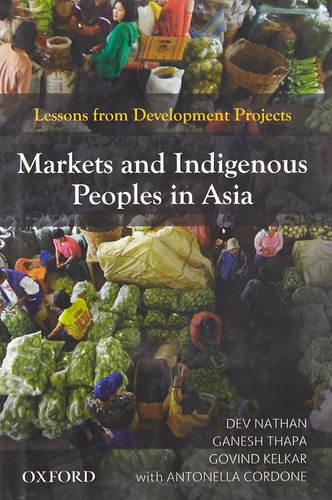
Markets and Indigenous Peoples in Asia: Lessons from Development Projects
0
0
As an Amazon Associate and affiliate partner, Menrva Books earns from qualifying purchases. Learn more
Author Description
This volume examines how development affects indigenous people in India, China, the Philippines, Indonesia, Lao PDR, and Vietnam, in a comparative perspective. It features multi-sited analyses, during and, of development projects in these countries over a period of about 15 years. The concept of development is approached in two ways: the first as improved well-being or welfare, and the second as the development of new capacities in production. The volume uses the results of, and lessons learnt, from these projects to look at broader issues of indigenous peoples' development. In doing so, it draws a framework for relevant future project design and implementation.
Menrva's Summary
THE THESIS
This volume investigates how various development projects impact the well-being and productive capacities of indigenous populations across several Asian nations. The authors, drawing on extensive field research and longitudinal data collected over 15 years, analyze the intersection of market integration and traditional livelihoods. By evaluating both welfare improvements and the expansion of economic agency, the text provides a framework for designing future interventions that respect indigenous autonomy.
THE SCOPE MAP
What You Will Find
- Comparative analysis of development projects in India, China, the Philippines, Indonesia, Lao PDR, and Vietnam.
- A dual-framework approach defining development as both welfare enhancement and capacity building.
- Longitudinal data spanning 15 years of project implementation and outcomes.
- Policy recommendations for future project design and implementation strategies.
THE AUTHORITY PERSPECTIVE
Experts identify this work as a significant contribution to the study of development economics and indigenous rights in Southeast and South Asia. Readers frequently note the academic rigor of the comparative analysis and its utility for policymakers and development practitioners.
Page Count:
246
Publication Date:
2012-12-02
Publisher:
Oxford University Press
ISBN-10:
0198078951
ISBN-13:
9780198078951
Economics
Sociology
Asia
Community Tags
Similar Books