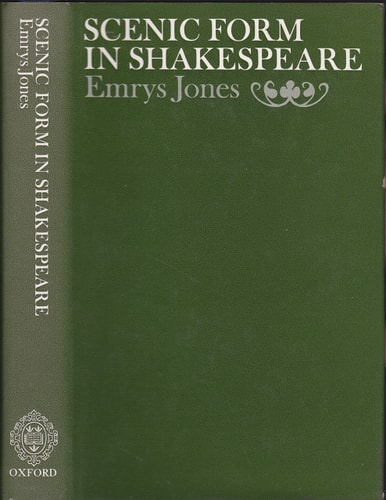
Scenic Form in Shakespeare
0
0
As an Amazon Associate and affiliate partner, Menrva Books earns from qualifying purchases. Learn more
Author Description
This study focuses attention on a vital but neglected aspect of Shakespeare's work as a dramatist: the invention and shaping of scenes. Jones opens with a description of Shakespeare's legendary mastery of scenic organization, and goes on to cover related topics concerning scenes and sequence. Included are the presentation of time (with a critical scrutiny of the "double-time" theory); the use of a two-part structure, with the implications this has for the meaning of the plays; and the ways in which Shakespeare evolves new scenic occasions largely out of his earlier work. The book closes with a detailed examination of four of Shakespeare's tragedies.
Menrva's Summary
THE THESIS
This study investigates the structural mechanics of Shakespearean drama, specifically focusing on the invention and organization of individual scenes. Emrys Jones, a noted scholar of English literature, utilizes a formalist approach to analyze how Shakespeare constructed his plays through deliberate scenic arrangement. By examining the interplay between sequence, time, and structural repetition, the author argues that the playwright's mastery lies in his ability to evolve complex dramatic occasions from established patterns.
THE SCOPE MAP
What You Will Find
- Analysis of the "double-time" theory and its application in Shakespearean chronology
- Examination of the two-part structural framework common in the plays
- Comparative study of how scenic motifs evolve across the canon
- Detailed critical readings of four major Shakespearean tragedies
THE AUTHORITY PERSPECTIVE
Scholars frequently cite this work as a foundational text for understanding the technical architecture of Shakespeare's dramaturgy. The prose is noted for its clarity and precision, making it accessible to both students and seasoned academics interested in the mechanics of stagecraft.
Page Count:
269
Publication Date:
1971-01-01
Publisher:
Clarendon Press
ISBN-10:
0198120125
ISBN-13:
9780198120124
Drama
Literary Criticism
Theater History
Community Tags
Similar Books