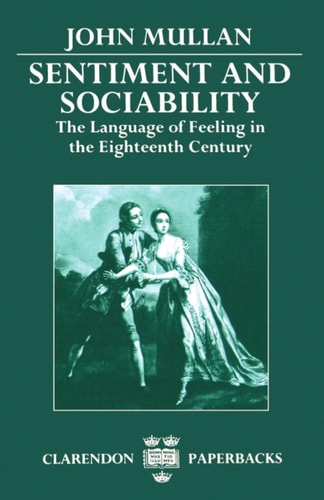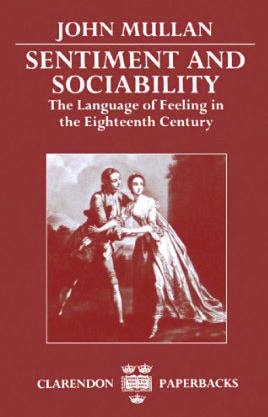
Sentiment and Sociability: The Language of Feeling in the Eighteenth Century
0
0
As an Amazon Associate and affiliate partner, Menrva Books earns from qualifying purchases. Learn more
Author Description
This study examines the autobiographical writing of Samuel Richardson, Laurence Sterne, and David Hume, who chronicled the peculiarly intimate relationships between the texts they produced and the social lives they lived. Each relied on a language of feeling to represent social bonds they considered necessary, discovering, through their writing, a sociability dependent on the communication of passions and sentiments. This discovery, Mullan argues, played a critical role in the development of the 18th-century fiction now called "sentimental."
Menrva's Summary
THE THESIS
This study investigates how the eighteenth-century preoccupation with sentiment and emotional expression fundamentally reshaped the relationship between personal identity and social interaction in literature. John Mullan examines the autobiographical and fictional works of Samuel Richardson, Laurence Sterne, and David Hume to demonstrate how these authors utilized a specific vocabulary of feeling to navigate social bonds. By analyzing the intersection of private passion and public communication, Mullan argues that these writers established the formal and thematic foundations of the sentimental novel.
THE SCOPE MAP
What You Will Find
- Analysis of the autobiographical writings of Samuel Richardson, Laurence Sterne, and David Hume.
- Exploration of the linguistic development of 'sentimental' discourse in the 1700s.
- Examination of the connection between private emotional experience and public social performance.
- Investigation into how literary production influenced contemporary understandings of sociability.
THE AUTHORITY PERSPECTIVE
Scholars frequently cite this work as a significant contribution to the study of eighteenth-century literary culture and the history of emotions. Experts highlight Mullan's ability to bridge the gap between philosophical inquiry and narrative analysis, making it a standard reference for those researching the origins of the sentimental genre.
Page Count:
272
Publication Date:
1988-08-04
Publisher:
Oxford University Press
ISBN-10:
0198128657
ISBN-13:
9780198128656
History
Biography
Philosophy
Literary Criticism
Eighteenth Century