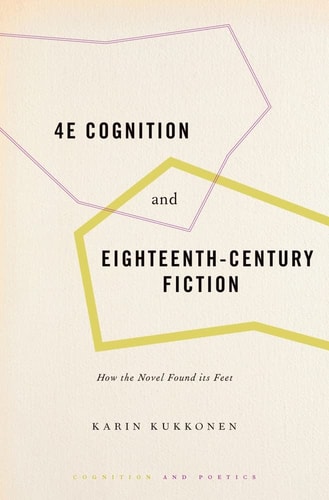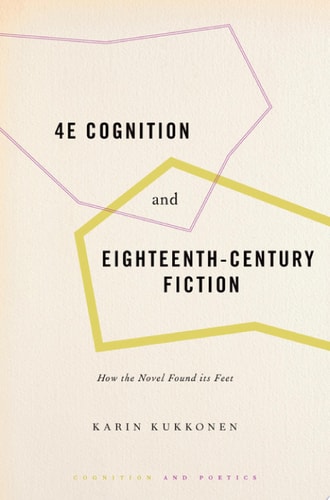
4E Cognition and Eighteenth-Century Fiction
0
0
As an Amazon Associate and affiliate partner, Menrva Books earns from qualifying purchases. Learn more
Author Description
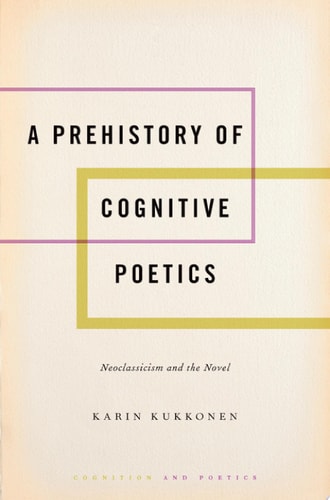
When The Novel Broke Into Cultural Prominence In The Eighteenth Century, It Became Notorious For The Gripping, Immersive Style Of Its Narratives. In This Book, Karin Kukkonen Explores This Phenomenon Through The Embodied Style In Eliza Haywood's Flamboyant Amatory Fiction, Charlotte Lennox's Work As A Cultural Broker Between Britain And France, Sarah Fielding's Experimental Novels, And Frances Burney's Practice Of Life-writing And Fiction-writing. Four Female Authors Who Are Often Written Out Of The History Of The Genre Are Here Foregrounded In A Critical Account That Emphasizes The Importance Of Engaging Readers' Minds And Bodies, And Which Invites Us To Revisit Our Understanding Of The Rise Of The Modern Novel. Kukkonen's Innovative Theoretical Approach Is Based On The Approach Of 4e Cognition, Which Views Thinking As Profoundly Embodied And Embedded In Social And Material Contexts, Extending Into Technologies And Material Devices (such As A Pen), And Enactive In The Inherent Links Between Perceiving The World And Moving Around In It. 4e Cognition And Eighteenth-century Fiction Investigates The Eighteenth-century Novel Through Each Of These Trajectories And Shows How Language Explores Its Embodied Dimension By Increasing The Descriptions Of Inner Perception, Or The Bodily Gestures Around Spoken Dialogue. The Embodied Dimension Is Then Related To The Media Ecologies Of Letter-writing, Book Learning, And Theatricality. As The Novel Feeds Off And Into These Social And Material Contexts, It Comes Into Its Own As A Lifeworld Technology That Might Not Answer To Standards Of Nineteenth-century Realism But That Feels 'real' Because It Is Integrated Into The Lifeworld And Embodied Experiences. 4e Cognition Answers One Of The Central Challenges To Cognitive Literary Studies: How To Integrate Historical And Cultural Contexts Into Cognitive Approaches.
Menrva's Summary
THE THESIS
How can the framework of 4E cognition—embodied, embedded, extended, and enactive—explain the immersive power and cultural rise of the eighteenth-century novel? Karin Kukkonen, a scholar specializing in cognitive literary studies, utilizes the 4E cognition paradigm to analyze the works of four prominent female authors: Eliza Haywood, Charlotte Lennox, Sarah Fielding, and Frances Burney. By examining how these writers integrated bodily perception and material context into their narratives, Kukkonen argues that the novel functioned as a 'lifeworld technology' that established a sense of reality through physical and social engagement rather than later standards of realism.
THE SCOPE MAP
What You Will Find
- An application of 4E cognition theory to eighteenth-century literary texts.
- Analysis of narrative techniques involving inner perception and bodily gestures.
- Examination of media ecologies including letter-writing, book learning, and theatricality.
- Critical re-evaluation of Eliza Haywood, Charlotte Lennox, Sarah Fielding, and Frances Burney.
Scope Limits
- The study does not focus on nineteenth-century realism or the evolution of the novel beyond the eighteenth century.
- It does not provide a general history of the novel, focusing instead on specific cognitive and material intersections.
THE AUTHORITY PERSPECTIVE
Scholars in the field recognize this work as a significant contribution to the integration of historical context within cognitive literary studies. Readers frequently note the academic density of the prose, which serves as a rigorous bridge between cognitive science and literary history.
Page Count:
264
Publication Date:
2019-01-01
Publisher:
Oxford University Press
ISBN-10:
0190913053
ISBN-13:
9780190913052
History of the Novel
Literary theory
Eighteenth Century
Literary Criticism
Community Tags
Similar Books