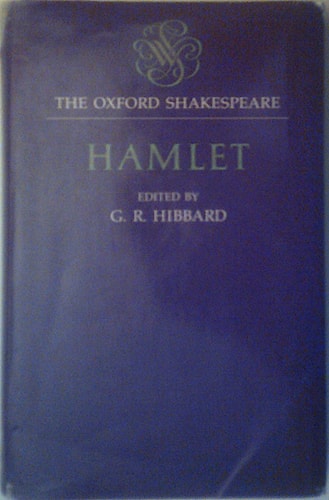
Hamlet
0
0
As an Amazon Associate and affiliate partner, Menrva Books earns from qualifying purchases. Learn more
Author Description
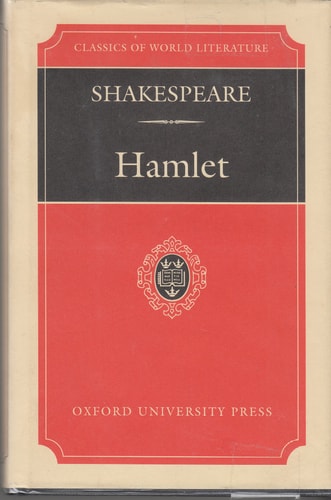
This edition of Hamlet represents a radically new text of the best known and most widely discussed of all Shakespearean tragedies. G.R. Hibbard argues, in a substantial introduction, that the presently accepted text is not, in fact, the most authoritative version of the play. Instead, he turns to the First Folio of 1623, Shakespeare's "fair copy" of the play that has been preserved for us in the Second Quarto. This revision of the play is more "theatrical" in the best sense of that word--it provides, as Shakespeare intended, a better, more practical acting script. Such changes as the omission of Horatio's account of the omens preceding Caesar's assassination, and Hamlet's on the drunkenness of Danes, give the play new momentum, and lend credence to Hibbard's claim that the familiar conflated text of Hamlet is a much more "problematic" play than it appears to have been in the First Folio.
Menrva's Summary
THE PULSE
Prince Hamlet is tasked with avenging his father's murder after encountering a ghost who reveals the treachery of the current King of Denmark. The protagonist struggles with the moral weight of his duty, the corruption of the royal court, and his own existential paralysis. Opposed by the calculating Claudius and the constraints of a court rife with surveillance, Hamlet navigates a world defined by political instability and shifting loyalties. The narrative unfolds through a complex structure of soliloquies, dramatic irony, and a play-within-a-play, forcing the reader to confront the ambiguity of truth and the finality of death.
INSIDE THE PAGES
- Use of extended soliloquies to reveal internal psychological states
- Incorporation of a play-within-a-play as a narrative device
- Exploration of themes including madness, betrayal, and mortality
- Utilization of blank verse and prose to distinguish character status
- Focus on the tension between action and contemplation
- Presence of supernatural elements as a catalyst for the plot
- Examination of political corruption within the Danish court
- Use of dramatic irony to heighten the sense of impending tragedy
THE COLLECTIVE ECHO
Discussion often centers on the linguistic precision and the philosophical depth of the protagonist's internal conflicts. Readers frequently highlight the play's enduring ability to sustain multiple interpretations regarding Hamlet's sanity and his true motivations. Critics often focus on the structural differences between various historical editions, noting how specific textual choices alter the pacing and theatrical impact of the performance. The work remains a central subject of academic inquiry, with many noting that the balance between intimate character study and grand political tragedy is what maintains its relevance across centuries.
Page Count:
416
Publication Date:
1987-06-11
Publisher:
Oxford University Press
ISBN-10:
0198129106
ISBN-13:
9780198129103
Drama
Dramas & Plays
British & Irish
English literature
New Used & Rental Textbooks
classic
Tragedy
Plays
Community Tags
Other Editions(12)

Oxford University Press
2012
Default edition
Oxford University Press
2011
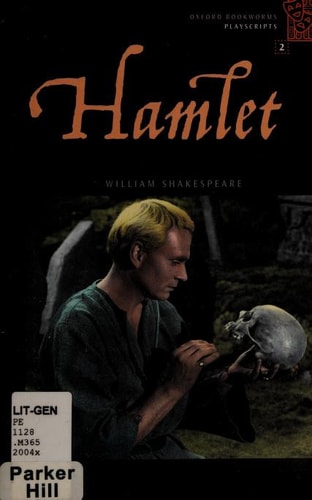
Oxford University Press
2005
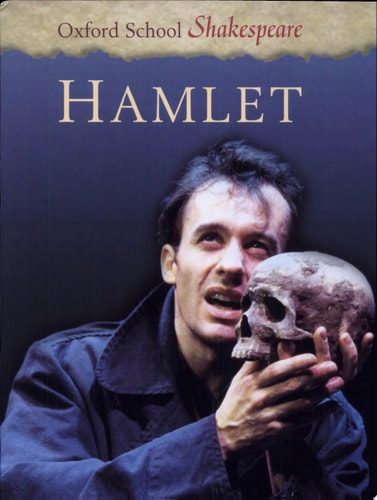
Oxford University Press
2002
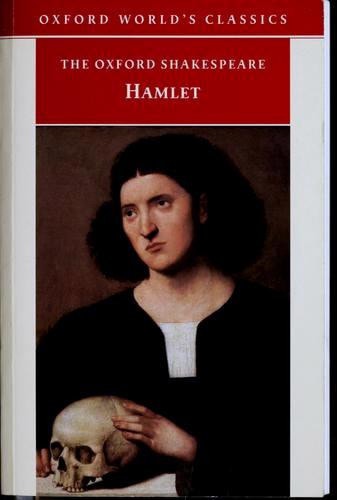
Oxford University Press
1998
Oxford University Press
1997

Oxford University Press
1996
Oxford University Press
1994

Dover Publications
1992

Oxford University Press
1987
Oxford University Press
1987
Oxford U.P
1968
Similar Books


Reader Comments
Share Your Thoughts
No comments yet. Be the first to share your thoughts!