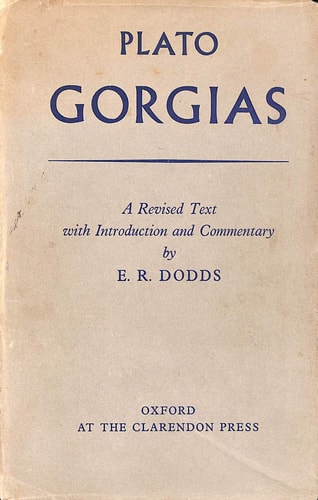
Gorgias
0
0
As an Amazon Associate and affiliate partner, Menrva Books earns from qualifying purchases. Learn more
Author Description
Taking the form of a dialogue between Socrates, Gorgias, Polus and Callicles, the Gorgias debates crucial questions about the nature of government. While the aspiring politician Callicles propounds the view that might is right, and the rhetorician Gorgias argues that oratory and the power to persuade represent 'the greatest good', Socrates insists on the duty of politicians to consider the welfare of their citizens - a duty he believed had been dishonoured in the Athens of his time. The dialogue offers insights into how classical Athens was governed, as well as creating a theoretical framework that has been highly influential on subsequent political debate.
Menrva's Summary
THE THESIS
This dialogue investigates the moral legitimacy of rhetoric and the true purpose of political leadership. Plato, writing from the perspective of his mentor Socrates, utilizes a dialectical framework to challenge the sophist Gorgias and his associates, Polus and Callicles. The text argues that the pursuit of power and persuasive ability, when divorced from justice and the moral welfare of the citizenry, constitutes a corruption of the state.
THE SCOPE MAP
What You Will Find
- A critical examination of rhetoric as a tool for persuasion versus a tool for truth.
- The philosophical conflict between the doctrine of 'might is right' and the Socratic emphasis on moral integrity.
- A detailed analysis of the responsibilities inherent in political governance.
- The application of the Socratic method to deconstruct the arguments of contemporary Athenian figures.
THE AUTHORITY PERSPECTIVE
Scholars and philosophers regard this text as a foundational work for understanding the tension between political pragmatism and ethical duty. Readers frequently note the density of the dialectical arguments, which require careful attention to follow the logical progression of the debate.
Page Count:
414
Publication Date:
1959-12-31
Publisher:
Oxford University Press
ISBN-10:
019814153X
ISBN-13:
9780198141532
Philosophy
Ethics
Classical
Rhetoric
Community Tags
Other Editions(75)
Left of Brain Books
2024
Default edition
Independently published
2023
Brian Westland
2023
Blurb, Incorporated
2023
Independently published
2023
Creative Media Partners, LLC
2022
Blurb, Incorporated
2022
Alpha Editions
2022
Independently published
2022
Sanage Publishing House
2021
Eternal Chrysostom LLC
2020
Independently Published
2020
Independently Published
2020

Independently published
2019
Brian Westland
2019
Independently Published
2019
Independently Published
2019

Independently Published
2019
Independently Published
2019
IndoEuropeanPublishing.com
2019

Digireads.com Publishing
2019

Independently Published
2019
Amazon Digital Services LLC - KDP Print US
2019
Digireads.com Publishing
2019
Amazon Digital Services LLC - KDP Print US
2018
Amazon Digital Services LLC - KDP Print US
2018

Independently Published
2018
Independently Published
2018
CreateSpace Independent Publishing Platform
2018
Wildside Press LLC
2018

CreateSpace Independent Publishing Platform
2018
CreateSpace Independent Publishing Platform
2018

Independently Published
2018
CreateSpace Independent Publishing Platform
2017
CreateSpace Independent Publishing Platform
2017
CreateSpace Independent Publishing Platform
2017
CreateSpace Independent Publishing Platform
2016
Creative Media Partners, LLC
2016

Xist Publishing
2016
CreateSpace Independent Publishing Platform
2015

CreateSpace Independent Publishing Platform
2015
CreateSpace Independent Publishing Platform
2015
CreateSpace Independent Publishing Platform
2013
CreateSpace Independent Publishing Platform
2013
CreateSpace Independent Publishing Platform
2013
Hachette Livre - BNF
2013

CreateSpace Independent Publishing Platform
2012
SISMEL edizioni del Galluzzo
2011
Kessinger Publishing, LLC
2010
Kessinger Publishing, LLC
2010
Digitalized by Watchmaker Publishing
2010
Standard Publications, Incorporated
2009
Akasha Classics
2009
CreateSpace Independent Publishing Platform
2009

Digireads.com Publishing
2009

Serenity Publishers, LLC
2008
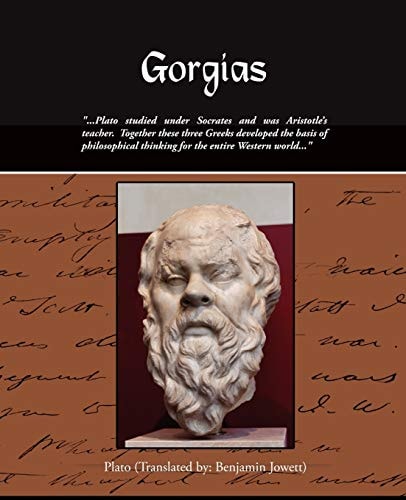
Standard Publications, Incorporated
2008
1st World Publishing, Incorporated
2008
IndyPublish.com
2008
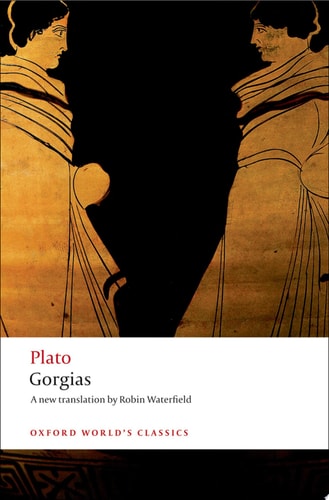
OUP Oxford
2008
Echo Library
2006
Quiet Vision Publishing
2004

Kessinger Publishing
2004
Penguin UK
2004
Penguin Books Limited
2004
Indy Publ.
2002

Les Belles Lettres
1997
Oxford University Press
1994
Oxford University Press
1994
Hackett Publishing
1987
Hackett Publishing Company
1987
Clarendon Press
1980
Oxford University Press
1959

Project Gutenberg
1900
Brian Westland
1878
Similar Books
Reader Comments
Share Your Thoughts
No comments yet. Be the first to share your thoughts!