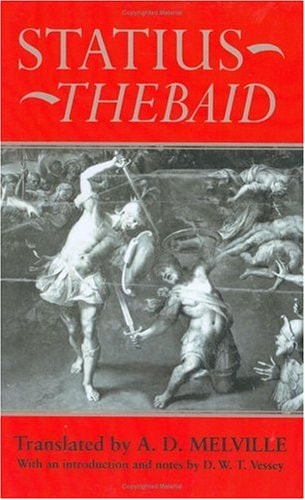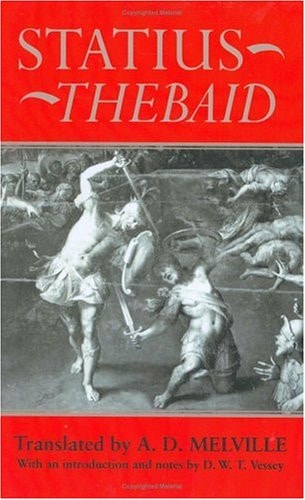
Thebaid
0
0
As an Amazon Associate and affiliate partner, Menrva Books earns from qualifying purchases. Learn more
Author Description
The Thebaid of Publius Papinas Statius, an epic poem in twelve books completed in about A.D. 90, has been thought by many to stand second only to Virgil's work among Latin narrative poems. It is the account of the war between Eteocles and Polynices, sons of Oedipus, for the throne of Thebes--rich in incident and always dramatic in tone, it unfolds a panorama of human ambition and violence, triumph and catastrophe. Though remaining within the Homeric and Virgilian tradition, it achieves its own power and vitality in thought, language, and description. This new translation captures all power of the Latin original, demonstrating that the Thebaid is not only a masterpiece of poetry but a compelling story, at times horrifying, noble, and pathetic, of humankind bound by the power of Fate.
Menrva's Summary
THE PULSE
The central conflict arises from the bitter struggle for the throne of Thebes between the brothers Eteocles and Polynices, fueled by the curse of their father, Oedipus. The narrative follows the brothers as they mobilize armies and divine forces to secure their claim, leading to a catastrophic war that ravages the city. Statius employs a formal epic structure, utilizing elevated language and mythological intervention to frame the moral decay and inevitable destruction of the royal house. The poem operates within the constraints of classical fate, where human agency is constantly mediated by the whims of the gods and the weight of ancestral sins.
INSIDE THE PAGES
- Twelve-book epic structure following the Homeric and Virgilian tradition
- Extensive use of divine intervention and mythological machinery
- Detailed descriptions of battlefield violence and tactical maneuvers
- Exploration of the psychological toll of civil war and fraternal hatred
- Rich, ornate Latinate poetic style emphasizing dramatic tension
- Focus on the theme of hubris and the inescapable nature of fate
- Inclusion of tragic monologues and character-driven lamentations
- Vivid imagery depicting the physical and moral ruin of Thebes
THE COLLECTIVE ECHO
Discussion often centers on the poem's complex relationship with its literary predecessors, particularly the influence of Virgil and Homer on Statius's narrative construction. Readers frequently highlight the intense, often dark atmosphere that permeates the work, noting how the poet balances grand-scale military action with intimate moments of human suffering. Critics often examine the effectiveness of the poem's moral framework, specifically how the curse of Oedipus serves as a catalyst for the relentless cycle of violence. The work is frequently praised for its technical precision and its ability to maintain a high level of dramatic tension throughout its twelve-book span. Scholars continue to debate the nuances of the translation, focusing on how well the English text preserves the original Latin's rhythmic and rhetorical power.
Page Count:
432
Publication Date:
1992-11-19
Publisher:
Oxford University Press
ISBN-10:
0198147821
ISBN-13:
9780198147824
Classical
Epic Poetry
War
Historical
Mythology