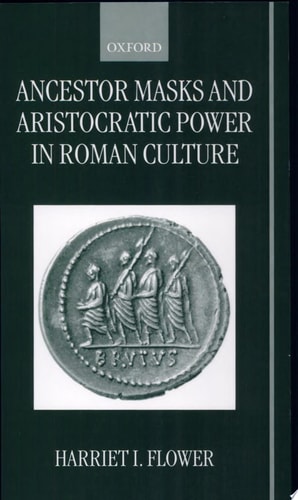
Ancestor Masks and Aristocratic Power in Roman Culture
0
0
As an Amazon Associate and affiliate partner, Menrva Books earns from qualifying purchases. Learn more
Author Description
Flower explains why the Roman elite commemorated politically prominent family members with wax masks worn by actors at the funerals of the deceased. She looks at literary sources, legal texts, epigraphy, archaeology, numismatics, and art, tracing the functional evolution of ancestor masks, from the third century BC to the sixth century AD. By putting these masks into their legal, social, and political context, Flower elucidates their central position in the media of the time and their special meaning as symbols of power and prestige.
Menrva's Summary
THE THESIS
This work investigates the cultural and political function of ancestor masks within the Roman elite and how these objects served as instruments of power and social status. Harriet I. Flower, a scholar of Roman history, utilizes a multidisciplinary approach to analyze the evolution of these funerary practices. By synthesizing evidence from legal texts, numismatics, and archaeology, she argues that the masks were not merely commemorative items but essential tools for maintaining aristocratic prestige across several centuries. The study provides a comprehensive framework for understanding how the Roman nobility utilized their lineage to navigate the complexities of political life.
THE SCOPE MAP
What You Will Find
- A chronological analysis of ancestor masks from the third century BC to the sixth century AD.
- An examination of the legal and social contexts that governed the use of masks in funeral processions.
- A synthesis of diverse evidence including literary sources, epigraphy, and archaeological findings.
- An exploration of the symbolic role of masks as media for political communication and elite identity.
THE AUTHORITY PERSPECTIVE
Experts recognize this text as a foundational study on Roman funerary customs and the visual culture of the aristocracy. Scholars frequently cite the book for its rigorous methodology and its ability to integrate disparate types of evidence into a cohesive historical argument.
Page Count:
436
Publication Date:
1997-02-13
Publisher:
Clarendon Press
ISBN-10:
0198150180
ISBN-13:
9780198150183
History
Rome
Nobility
Sociology
Archaeology
Power Social sciences
Roman History
Educational Resources
Social Class
Europe
Funeral Rites
Ancient History
Masks