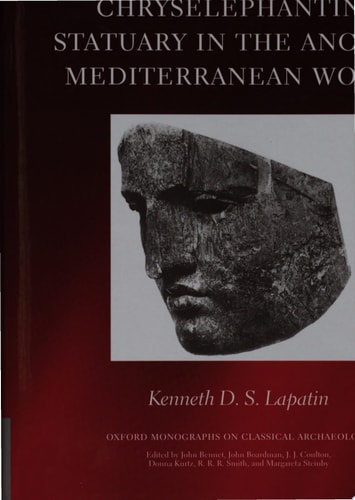
Chryselephantine Statuary in the Ancient Mediterranean World
0
0
As an Amazon Associate and affiliate partner, Menrva Books earns from qualifying purchases. Learn more
Author Description
Composite statues of gold (chrysos), ivory (elephas), and other precious materials were the most celebrated artworks of classical antiquity. Greek and Latin authors leave no doubt that such images provided a centrepiece for religious and civic life and that vast sums were spent to produce them. A number of these statues were the creations of antiquity's most highly acclaimed artists: Polykleitos, Alkamenes, Leochares, and, of course, Pheidias, whose magnificent Zeus Olympios came to be ranked among the Seven Wonders of the World. Although a few individual images such as Pheidias' Athena Parthenos have been the subject of detailed scholarly analysis, chryselephantine statuary as a class, from the exquisite statuettes of Minoan Crete to the majestic temple images constructed by classical Greek city-states and imitated by the Romans, has not received comprehensive study since 1815. This book presents not only the ancient literary and epigraphical evidence for lost statues and examines representations of them in other media, but also assembles and analyses much-neglected physical survivals, elucidating throughout the innovative techniques, such as ivory-bending, employed in their production.
Menrva's Summary
THE THESIS
This monograph investigates the historical, technical, and cultural significance of chryselephantine statuary within the ancient Mediterranean, addressing the long-standing absence of a comprehensive study on this medium. Kenneth D. S. Lapatin, a specialist in classical art and archaeology, synthesizes literary, epigraphical, and physical evidence to reconstruct the role of these gold-and-ivory composite statues. The work challenges previous scholarly neglect by examining the evolution of these objects from Minoan Crete through the Roman period, providing a rigorous analytical framework for understanding their production and social function.
THE SCOPE MAP
What You Will Find
- A comprehensive catalog of both lost and surviving chryselephantine artifacts.
- Analysis of ancient manufacturing techniques, including the specialized process of ivory-bending.
- Examination of literary and epigraphical sources documenting the commissioning and civic importance of temple images.
- Comparative study of representations of these statues in other artistic media, such as vase painting and coinage.
THE AUTHORITY PERSPECTIVE
Scholars recognize this text as the definitive modern reference on the subject, filling a significant gap in classical archaeology that had persisted since the early nineteenth century. The work is noted for its meticulous synthesis of diverse evidence types, making it a foundational resource for researchers in ancient art and material culture.
Page Count:
249
Publication Date:
2002-01-01
Publisher:
Oxford University Press, USA
ISBN-10:
0198153112
ISBN-13:
9780198153115
History
Ancient Greece
Archaeology
Art History
Community Tags
Similar Books