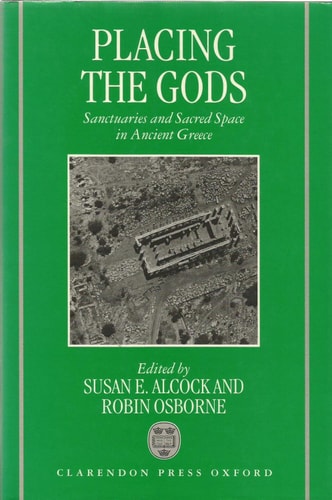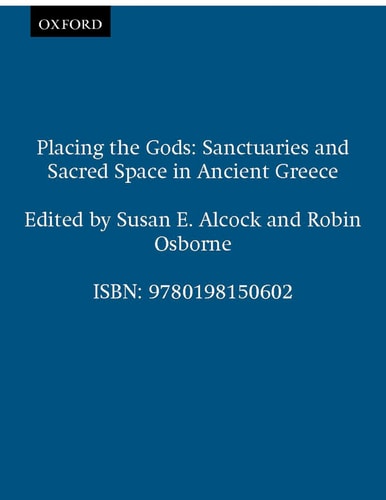
Placing the Gods: Sanctuaries and Sacred Space in Ancient Greece
0
0
As an Amazon Associate and affiliate partner, Menrva Books earns from qualifying purchases. Learn more
Author Description
Cult activity played an extremely important role in ancient Greece--to the point, historians believe, that the placing of cult centers played a major part in establishing the whole concept of the city-state in archaic Greece. The essays in this collection critically examine the social and political importance of sanctuary placement, extending the analysis back to Mycenean Greece and on to Greece under Roman occupation. Revealing the complexity of relations between religion and politics in ancient Greece, these essays show how important tradition, gender relations, and cult identity were in creating and maintaining the religious mapping of the ancient Greek countryside.
Menrva's Summary
THE THESIS
This collection investigates how the physical placement of sanctuaries and cult centers functioned as a foundational mechanism for social and political organization in ancient Greece. Editors Susan E. Alcock and Robin Osborne assemble a series of scholarly essays that analyze the intersection of religious practice and civic identity. By examining the landscape from the Mycenaean period through Roman occupation, the contributors argue that the geography of sacred space was not incidental but central to the development of the Greek city-state.
THE SCOPE MAP
What You Will Find
- Analysis of sanctuary placement from the Mycenaean era to the Roman period
- Examination of the relationship between religious cults and the formation of the city-state
- Discussion of how gender relations and tradition influenced the religious mapping of the countryside
- Investigation into the political utility of cult identity in ancient Greek society
THE AUTHORITY PERSPECTIVE
Scholars and students of classical history frequently cite this collection as a foundational text for understanding the spatial politics of the ancient Mediterranean. Experts note that the essays provide a rigorous, multi-disciplinary framework that remains relevant for contemporary archaeological and historical research.
Page Count:
224
Publication Date:
1996-07-25
Publisher:
Clarendon Press
ISBN-10:
0198150601
ISBN-13:
9780198150602
Religion
History
Greece
Sacred Space
Archaeology
Ancient Greece