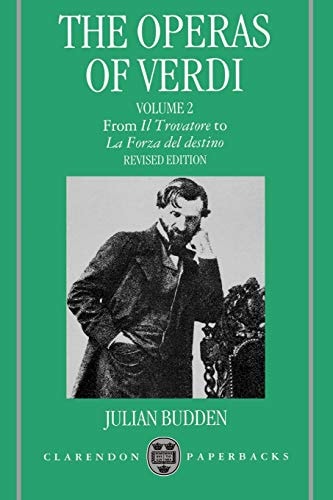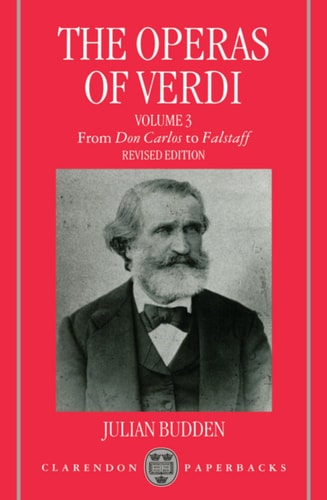
The Operas of Verdi: Volume 3: From Don Carlos to Falstaff
0
0
As an Amazon Associate and affiliate partner, Menrva Books earns from qualifying purchases. Learn more
Author Description
Volume Three covers roughly a quarter of a century, a period which saw grand opera on the Parisian model established throughout Italy, the reform of the Conservatories, and the spread of cosmopolitan influences to an extent that convinced many that Italian music was losing its identity. Verdi produced his four last and greatest operas--Don Carlos, Aida, Otello, and Falstaff--in this period, which ended with the advent of "verisimo", in which a new, recognizably Italian idiom was inaugurated.
Menrva's Summary
THE THESIS
This volume investigates the evolution of Giuseppe Verdi's compositional style and the shifting cultural landscape of Italian opera during the final quarter of the nineteenth century. Julian Budden, a renowned musicologist and authority on Verdi, utilizes extensive archival research and musical analysis to examine how the composer navigated the transition from traditional Italian forms to the cosmopolitan influences of the Parisian grand opera model. The text argues that Verdi's late-career output represents a synthesis of these international trends while maintaining a distinct, evolving Italian identity.
THE SCOPE MAP
What You Will Find
- Detailed musicological analysis of Don Carlos, Aida, Otello, and Falstaff.
- Historical context regarding the reform of Italian Conservatories.
- Examination of the rise of verismo as a reaction to cosmopolitan musical trends.
- Primary source documentation regarding the production history of Verdi's final masterpieces.
THE AUTHORITY PERSPECTIVE
Experts and music historians consistently cite this volume as a foundational text for understanding the late period of Verdi's career. Readers frequently note the academic density of the prose, which provides a rigorous examination of both the scores and the socio-political environment of the era.
Page Count:
552
Publication Date:
1992-09-03
Publisher:
Clarendon Press
ISBN-10:
0198162634
ISBN-13:
9780198162636
Biography
Music
Opera italy
Music History
Opera
Community Tags
Similar Books