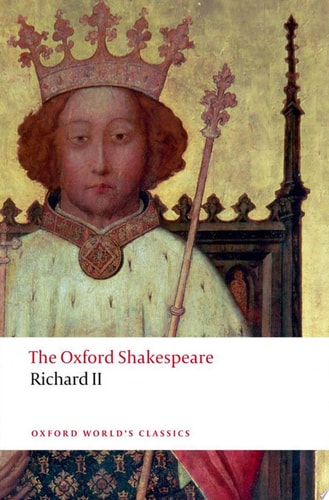
Richard II
0
0
As an Amazon Associate and affiliate partner, Menrva Books earns from qualifying purchases. Learn more
Author Description
Written in 1595, Richard II occupies a significant place in the Shakespeare canon. It marks the transition from the earlier history plays dominated by civil war and stark power to a more nuanced representation of the political conflicts of England's past where character and politics are inextricably intertwined. Deftly combining history with tragedy, its tale of bad government and usurpation had great political immediacy for its first audiences in late Elizabethan England and continues to resonate today. This scholarly but student-friendly edition features a freshly edited version of the text based on the early quartos and first Folio of 1623. The thorough set of textual notes and full commentary are designed to aid the modern reader to better understand and appreciate the language, the characters, and the dramatic action. The introduction places the play squarely in its own time, describing its topical significance and its political perspectives, and showing how carefully Shakespeare positioned his play within an ongoing political conversation. Together with this historical perspective, the introduction focuses as well on the play's richly poetic language and its great success over the centuries as a play for the stage.
Menrva's Summary
THE PULSE
The central conflict arises when King Richard II faces a challenge to his divine right to rule from his cousin, Henry Bolingbroke, leading to a struggle for the English throne. The protagonist, Richard II, must navigate the erosion of his authority as his political missteps and perceived tyranny alienate his nobles. Opposing him is Bolingbroke, a pragmatic and ambitious figure who capitalizes on the king's instability to seize power. The narrative, presented in verse and prose, explores the physical and logical constraints of medieval kingship, where the monarch's identity is inseparable from the state. This play functions as a political tragedy, examining the shift from absolute rule to the realities of usurpation.
INSIDE THE PAGES
- Use of iambic pentameter to elevate the gravity of political discourse
- Exploration of the 'divine right of kings' versus political pragmatism
- Characterization of Richard II as a tragic, self-reflective figure
- Contrast between the ritualistic language of the court and the blunt speech of rebels
- Themes of legitimacy, betrayal, and the nature of sovereignty
- Dramatic irony regarding the consequences of deposing a monarch
- Symbolic imagery involving the crown, the earth, and the sun
- Structural focus on the transition from medieval order to modern political conflict
THE COLLECTIVE ECHO
Readers and critics frequently highlight the play's lyrical intensity and its sophisticated examination of political legitimacy. Discussion often centers on the transformation of Richard II from a detached, arrogant ruler into a deeply introspective man facing his own mortality. Scholars emphasize the balance between the play's historical context and its enduring relevance as a study of power dynamics. The atmosphere is often described as somber and reflective, focusing more on the psychological weight of the crown than on external battle scenes. Many readers appreciate how the text invites debate regarding the morality of rebellion and the fragility of political systems.
Page Count:
300
Publication Date:
2011-01-01
Publisher:
Oxford University Press
ISBN-10:
0198186428
ISBN-13:
9780198186427
Drama
History
Shakespeare
Political fiction
Dramatic works
Plays
English literature
Community Tags
Similar Books