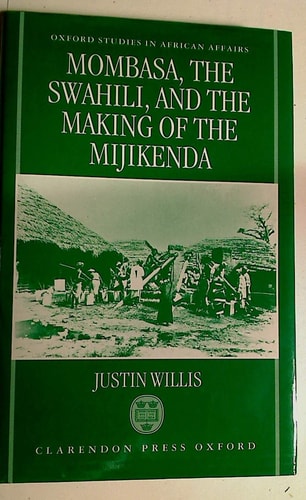
Mombasa, the Swahili, and the Making of the Mijikenda
0
0
As an Amazon Associate and affiliate partner, Menrva Books earns from qualifying purchases. Learn more
Author Description
This is a history of the Kenyan city of Mombasa and its surrounding settlements from the mid-nineteenth century to the height of colonial rule in the 1930s. Justin Willis sets out to place the island and town of Mombasa in its African context, incorporating the findings of recent historical and anthropological research. Willis examines the institutions and social networks which simultaneously united and divided the people of the region before the colonial period, demonstrating both their interdependence and the creation of distinct population categories. This is a radical re-interpretation of the history of Mombasa and its hinterland, based on thorough archival research. It offers valuable insights into the nature of ethnic identity, and makes an important contribution to the growing body of scholarly work on the African city.
Menrva's Summary
THE THESIS
This work investigates how the social and political identities of the Mijikenda and the inhabitants of Mombasa were constructed and transformed during the transition from the mid-nineteenth century to the 1930s. Justin Willis, an established scholar in African history, utilizes extensive archival research and anthropological frameworks to challenge traditional colonial narratives. He argues that ethnic boundaries were not static, but were actively negotiated through complex social networks and institutional interdependence within the region.
THE SCOPE MAP
What You Will Find
- Historical analysis of Mombasa and its hinterland from the mid-1800s to the 1930s.
- Examination of the social networks and institutions that shaped regional identity.
- Integration of archival documentation and contemporary anthropological research.
- Exploration of the processes that created distinct ethnic categories among the Mijikenda and Swahili populations.
THE AUTHORITY PERSPECTIVE
Experts recognize this text as a significant contribution to the historiography of the East African coast, particularly for its nuanced approach to ethnic identity formation. Scholars frequently cite the book for its rigorous archival methodology and its ability to reframe the relationship between urban centers and their surrounding rural populations.
Page Count:
256
Publication Date:
1993-04-08
Publisher:
Clarendon Press
ISBN-10:
0198203209
ISBN-13:
9780198203209
History
African history
Sociology
Anthropology
Mombasa
Politics & Government
Urban Studies
Colonialism